



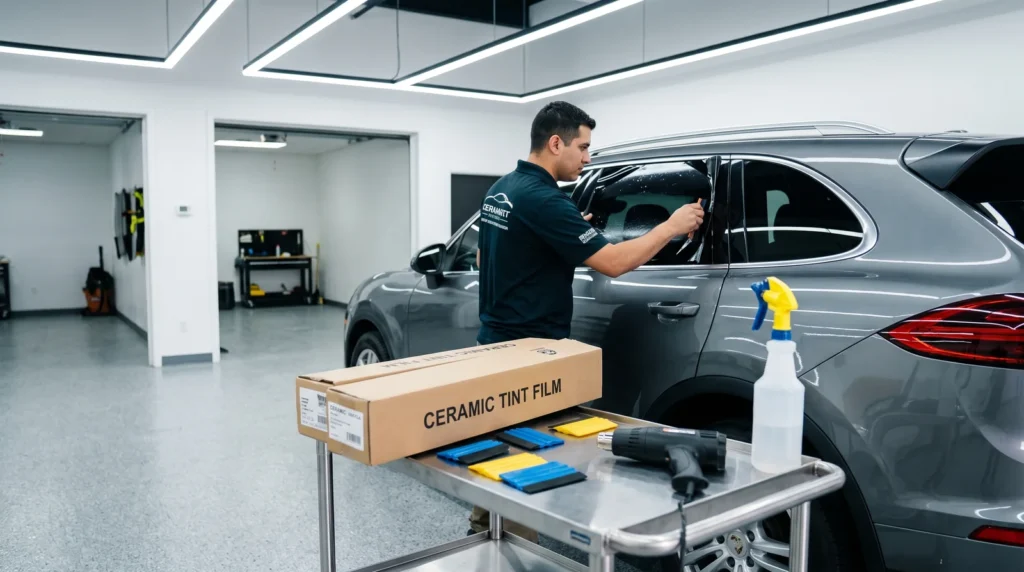
Window tinting is one of the few automotive services you can launch from a single bay with a few thousand dollars, and it keeps selling in every season: heat in summer, privacy and glare year-round, and a steady stream of EV owners who discover what a panoramic glass roof does to a cabin. This guide covers what it actually takes to start a window tint business in 2026 — realistic startup costs, the equipment and consumables you need on day one, which film to stock first, how to think about pricing, and how to buy everything at dealer pricing instead of retail.
The quick version
- A lean one-bay shop or mobile setup typically launches for a few thousand dollars; a plotter and pattern software are the big optional line item.
- Film is a small share of the ticket — a sedan uses roughly 25–35 sq ft, so a 36″ × 100′ roll covers around 8–12 cars.
- Stock two tiers: a colour-stable carbon film for value jobs and a nano-ceramic film for the heat-rejection upsell.
- The consumables matter as much as the film: a proper tack solution, a clean slip solution and a tack-control additive for hot glass.
- Register as a dealer to buy film, tint, displays and consumables at wholesale pricing.
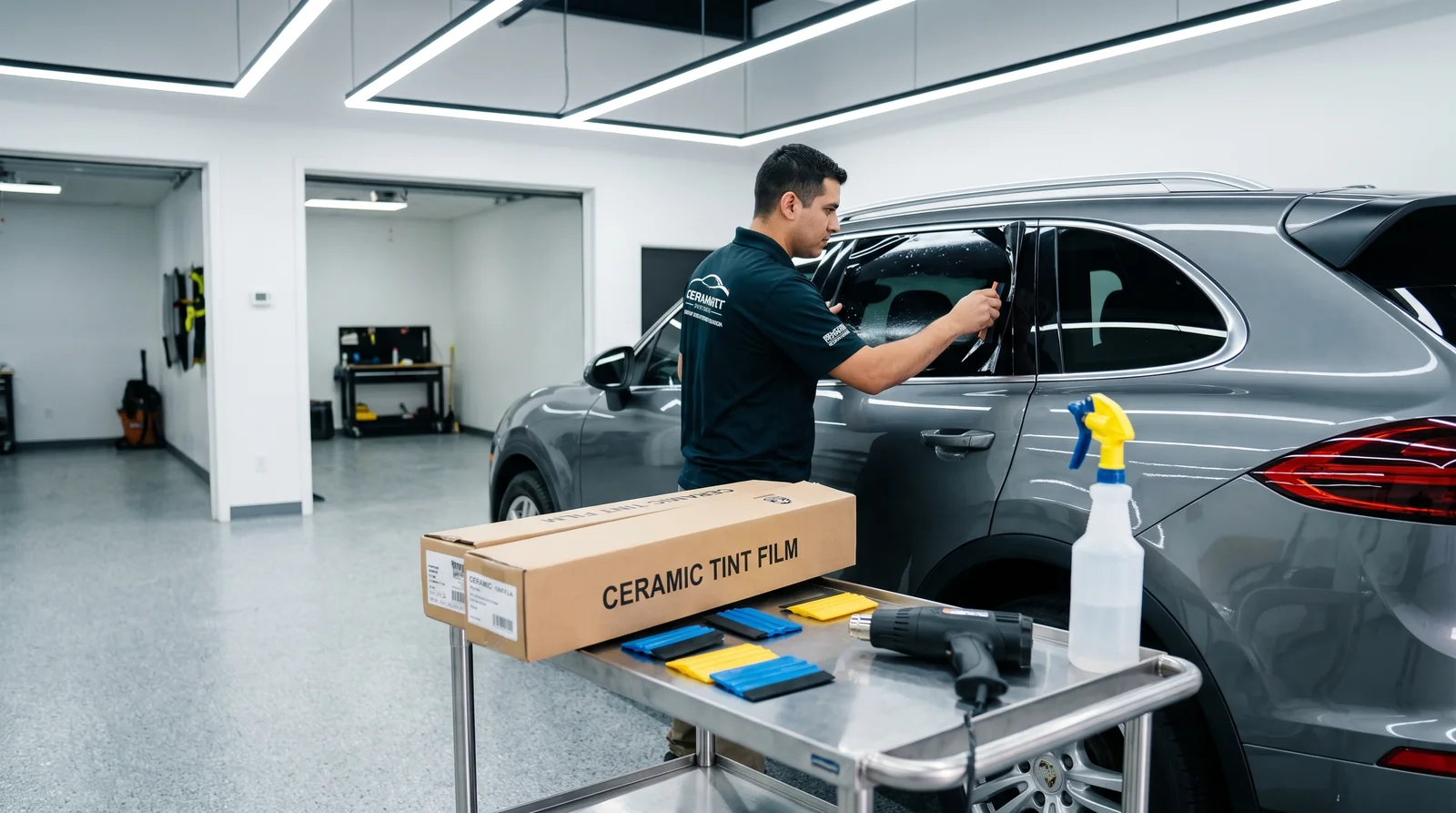
Is window tinting a good business in 2026?
Demand is broad and repeatable. Every car sold is a potential tint job, ceramic films have given shops a genuine premium upsell, and electric vehicles with glass roofs are pushing customers toward higher heat-rejection film. Fixed costs are low compared with paint, body or PPF work, and the consumables and film you use are the kind of thing you re-order every month — which is exactly what a distributor relationship is for.
The business is skill-driven: a clean, bubble-free, correctly shrunk install on a curved rear glass is what customers pay for and what earns referrals. Plan for a learning curve and price for your market, not for the cheapest shop in town.
Startup costs: what a lean tint shop really needs
These are typical U.S. ranges for a one-bay or mobile start. Your state, city and whether you already have a space will move the numbers.
| Item | Typical range | Notes |
|---|---|---|
| Workspace | $0 – $2,500 / month | Mobile start from a van, a rented bay, or a corner of an existing detail shop. |
| Hand tools (squeegees, cards, blades, scrubbers) | $300 – $800 | Buy quality once; cheap cards scratch film. |
| Heat gun / steamer | $80 – $400 | Heat shrinking rear glass is non-negotiable. |
| Tint meter | $150 – $400 | Verifies VLT against state law and protects you in disputes. |
| Plotter + pattern software (optional) | $1,500 – $4,000 + subscription | Speeds up volume work; many shops start hand-cutting. |
| Starter film inventory | $700 – $2,000 | Two or three rolls in the shades your market asks for most. |
| Install consumables | $100 – $250 | Tack solution, slip solution, tack-control additive, distilled water, towels. |
| Lighting, signage, basic marketing | $200 – $1,000 | Work lights are a quality tool, not decoration. |
| Business license, insurance | Varies by state | Garage liability cover is usually required for a bay. |
Add it up and a lean launch without a plotter commonly lands in the $3,000 – $8,000 range; with a plotter and software, $5,000 – $12,000. The biggest savings are in starting without a plotter and buying film and consumables at dealer pricing rather than from a retail storefront.
The equipment list
- Squeegees and hard cards — a stiff squeegee for pushing solution, a softer card for edges and dot matrix.
- Snap-off knives and fresh 30° blades — change blades often; a dull blade drags film.
- Heat gun (and a steamer if you like one for shrinking) with a shrink pattern you practise on scrap glass.
- Two spray bottles, labelled — one for slip solution, one for tack solution. Never mix them.
- Lint-free towels, scrub pads and a window scraper for prep.
- Tint meter for VLT checks.
- Film roll stand or wall rack so rolls stay clean and straight.
- Work lights on both sides of the glass — contamination you cannot see becomes a callback.
- Plotter and pattern software once volume justifies it.
Consumables that make or break the install
Film gets the credit, but most defects on day one come from solution choices: dot matrix that silvers, edges that float, or film that tacks before it is positioned on hot glass. These four are what professional shops keep on the cart:
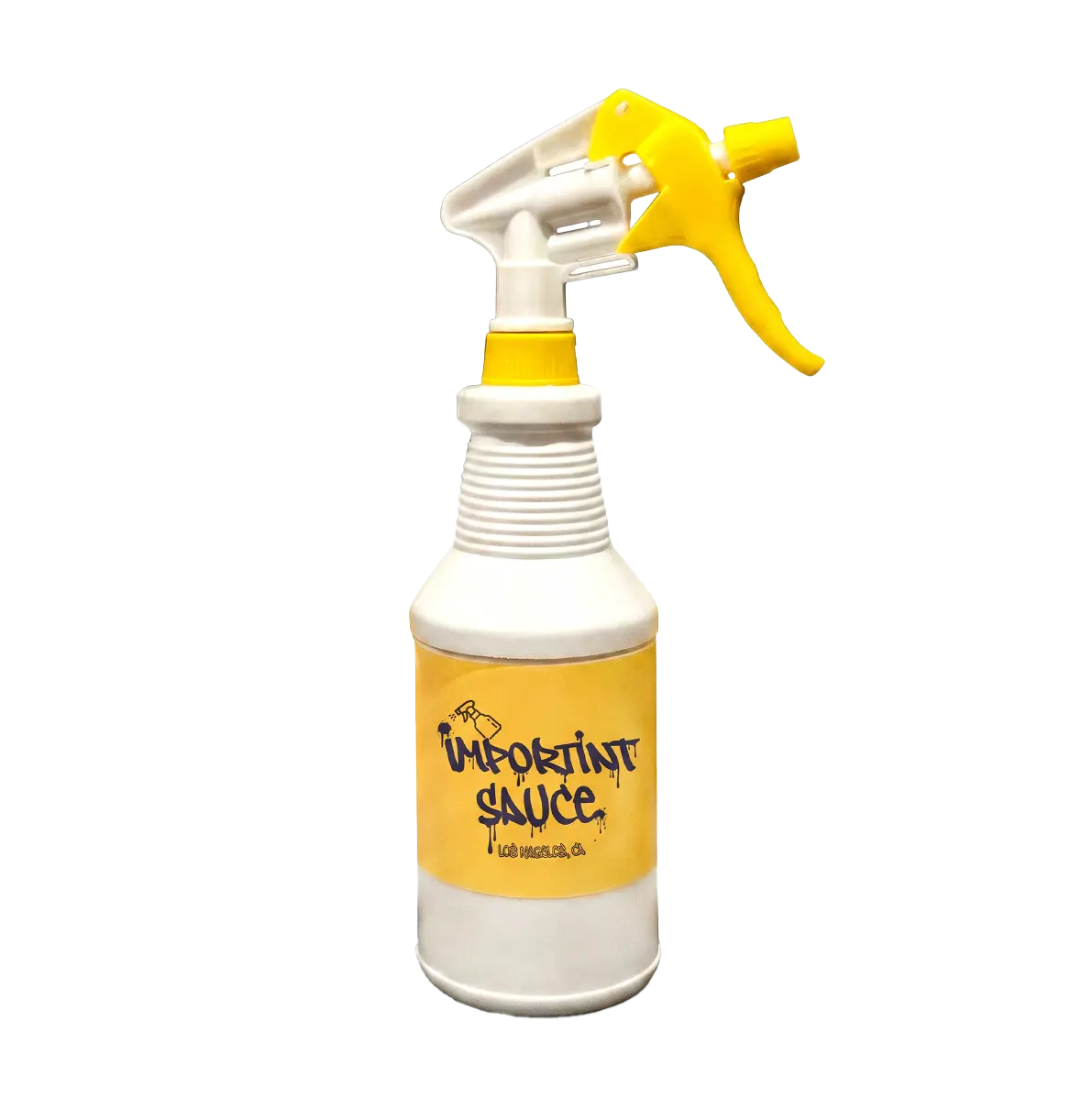 ImporTint SauceImporTint Sauce — the dot-matrix and edge solution tint shops run on.from $30Shop →Slip Solution
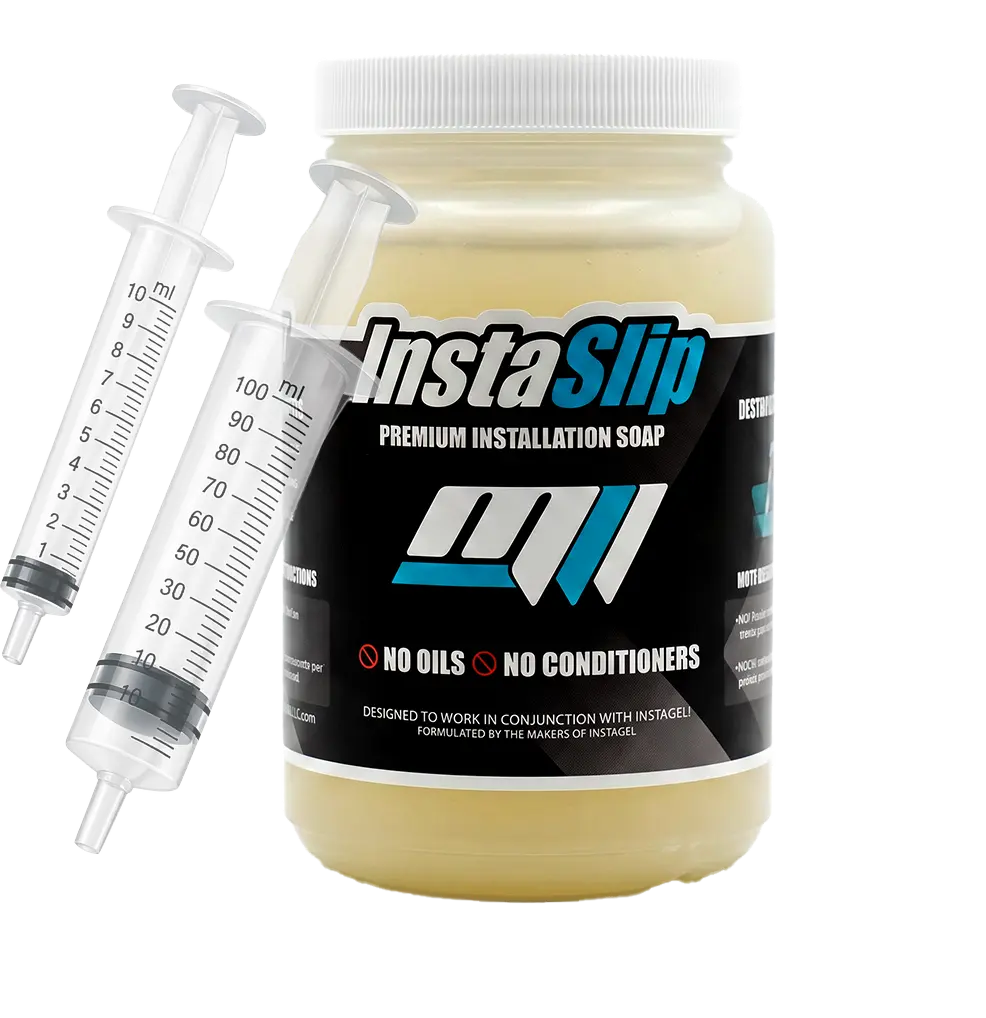 InstaSlipInstaSlip — oil-free, conditioner-free slip, 5–8 mL per gallon.from $23.99Shop →Tack Control
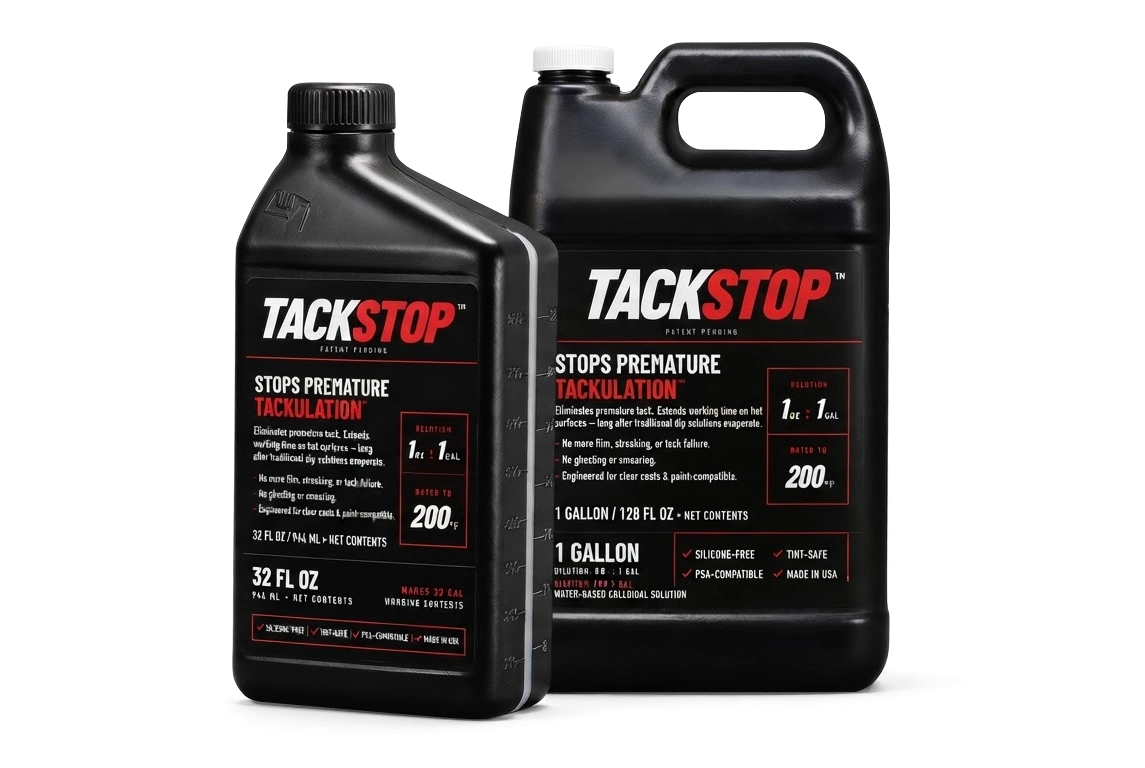 TackStopTackStop — 1 oz per gallon buys 3–5× more working time on hot glass.from $27Shop →PPF Gel
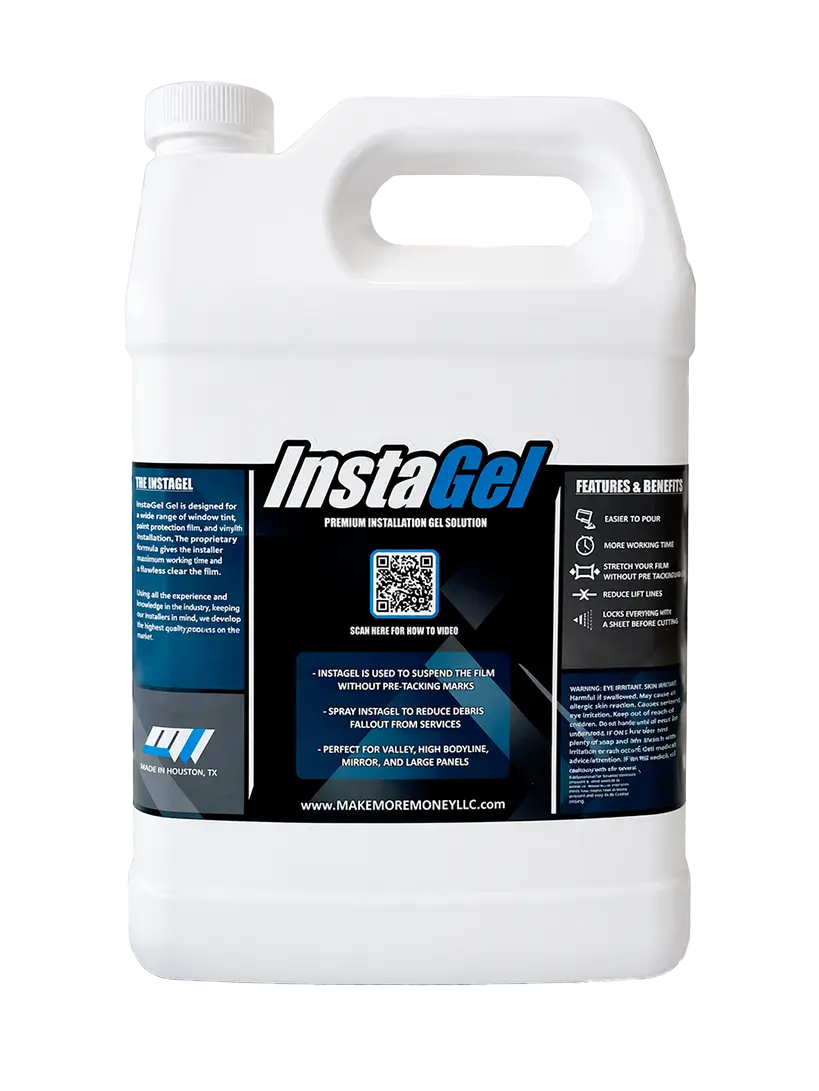 InstaGelInstaGel — if you also do PPF, this is the install gel.from $32Shop →
If you are new to the chemistry, read slip vs tack vs gel and how to mix slip solution before your first paying job.
Which window film to stock first
Stock two tiers and sell them as a choice, not a lecture. A colour-stable carbon film covers value and privacy jobs; a nano-ceramic film covers customers who ask about heat.
| NanoTek Prizm Carbon | NanoTek Prizm Ceramic Plus | |
|---|---|---|
| Construction | Colour-stable carbon, non-metallic | Multi-layer nano-ceramic, non-metallic |
| Infrared heat rejection | Up to 75% depending on shade | Up to 97% |
| UV | Blocks 99% | Blocks 99% |
| Shades | 5%, 15%, 25%, 35%, 50% | 5%, 15%, 20%, 35%, 50%, 70% |
| Roll widths × 100 ft | 20″, 24″, 36″, 40″, 60″ | 20″, 24″, 36″, 40″, 60″ |
| Dealer price per roll | $145 (20″) to $350 (60″) | $205 (20″) to $550 (60″) |
| Warranty | Lifetime | Lifetime, transferable |
| Sell it as | Factory look, privacy, value | Cooler cabin, EVs, premium |
Width guide: 20″ and 24″ handle most front and rear side windows, 36″ and 40″ cover rear glass and large side windows, and 60″ is for one-piece rear glass on trucks and SUVs. A common starting set is three 36″ rolls of carbon in 5%, 20% and 35% plus one 36″ roll of ceramic in the shade your market asks for most.
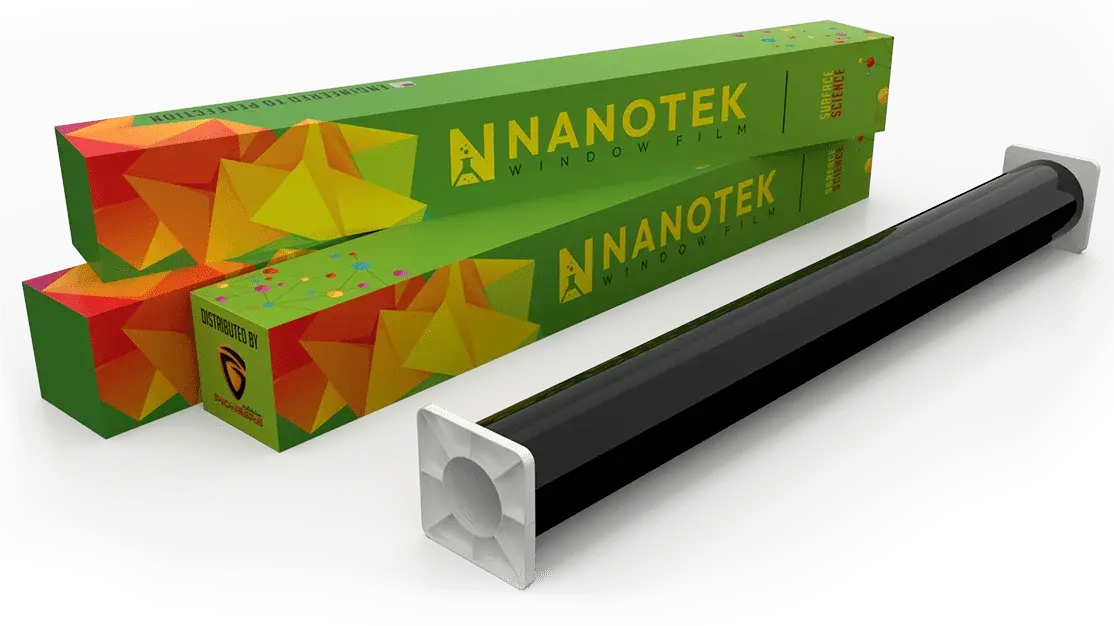 NanoTek Prizm Carbon Window TintNanoTek Prizm Carbon — colour-stable carbon, factory look, five shades.from $145Shop →Premium TierNanoTek Prizm Ceramic Plus Window TintNanoTek Prizm Ceramic Plus — up to 97% IR rejection, zero signal interference.from $205Shop →Close More Sales
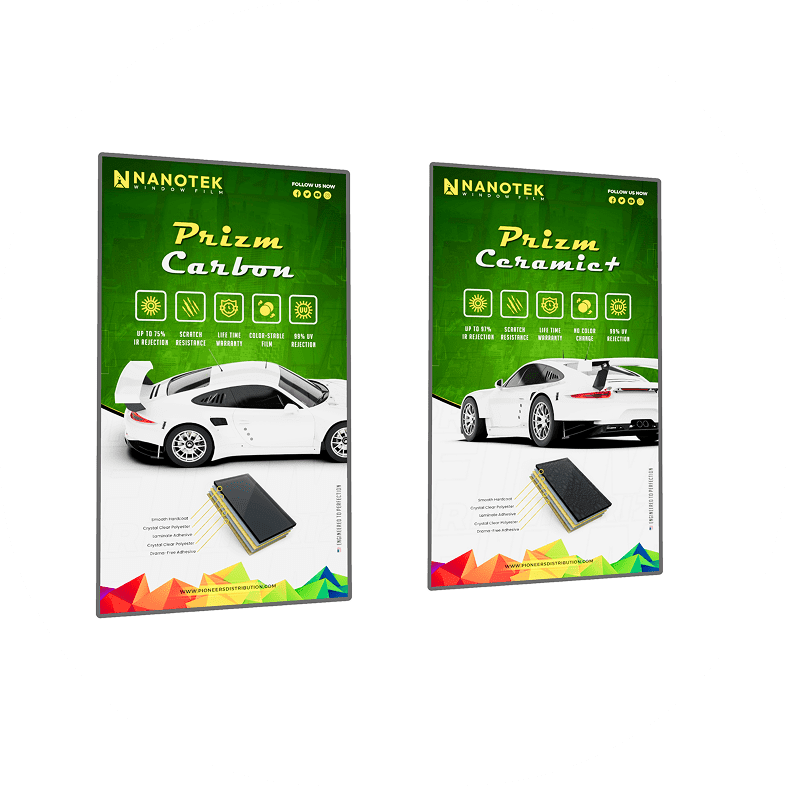 NanoTek Prizm Display BoardsPrizm illuminated display boards — show the heat difference instead of describing it.from $150Shop →
Pricing jobs and film cost per car
A 36″ × 100′ roll is 300 square feet. A typical sedan uses roughly 25–35 square feet of film across the sides and rear, so one roll covers about 8–12 sedans. At dealer pricing that is about $20–$30 of carbon film per car, or $30–$45 of ceramic. Published shop prices for a full sedan commonly run a few hundred dollars for carbon and more for ceramic, which is why film cost is rarely what decides a shop’s margin — labour, skill and callbacks are.
Price the ceramic upsell on what it does (cooler cabin, no signal interference, lifetime warranty), quote by vehicle size, and keep a written VLT policy so you never tint below your state’s legal limit.
The legal side: VLT laws
Every state sets its own visible light transmission limits per window, and some restrict reflectivity and colour. Keep a tint meter in the shop, keep a copy of your state’s rules on the wall, and read our window tint percentages and VLT guide before you quote darker shades.
Training and your first twenty cars
- Practise shrinking on scrap rear glass until your pattern is consistent — see the most common installation mistakes.
- Learn the dot matrix technique early; it is the first place customers look for silvering.
- On hot days, slow the tack with an additive rather than rushing — tacking too fast on hot glass explains why.
- Book structured training through Pioneers Distribution training if you want to shorten the curve.
Buy at dealer pricing
Retail film and consumables will eat your margin. A dealer account with Pioneers Distribution gives you wholesale pricing on NanoTek Prizm film, illuminated display boards for the showroom, and the install chemistry above, shipped from Minnesota.
Frequently asked questions
A lean one-bay or mobile start typically runs $3,000–$8,000 without a plotter and $5,000–$12,000 with one, depending on your space, state licensing and how much film you stock up front.
No. Many shops hand-cut for their first year and add a plotter once volume justifies it. A plotter speeds up work and reduces waste; it does not fix technique.
A 36″ × 100′ roll is 300 square feet. A typical sedan uses 25–35 square feet, so roughly 8–12 cars per roll, fewer for SUVs and trucks.
Both. Carbon covers privacy and value jobs; ceramic is the heat-rejection upsell and the right answer for EVs. Stocking one roll of each lets you sell a choice.
Through an authorized distributor. Pioneers Distribution supplies NanoTek Prizm window film, display boards and installation consumables to registered dealers at wholesale pricing.
Open your dealer account
Wholesale pricing on NanoTek Prizm film, display boards and installation consumables. Apply in two minutes.
Become a Dealer