



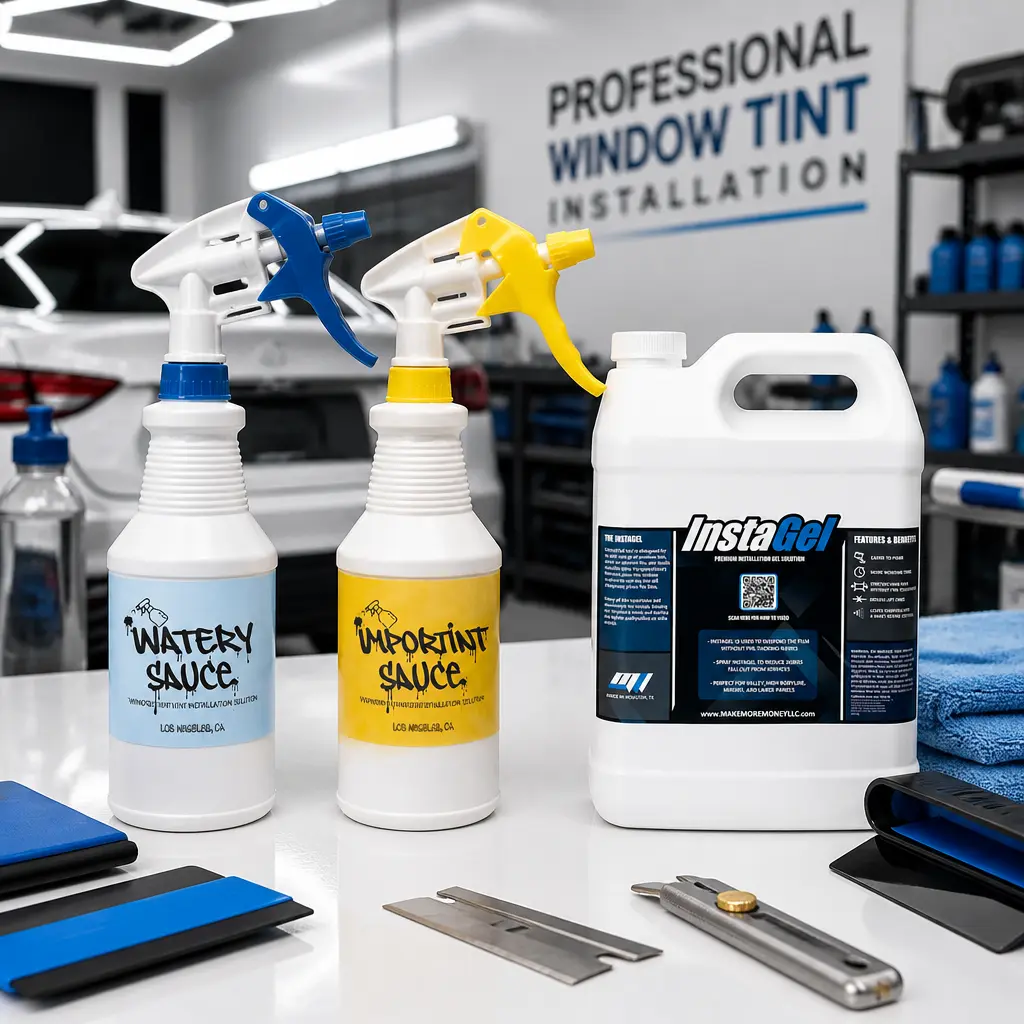
Choosing the best window tint installation solution can make the difference between a flawless tint job and a frustrating callback. But with so many options on the market — slip solutions, tack solutions, installation gels, baby shampoo, dish soap — how do you know which one is right for the job?
What this guide covers
- Best Window Tint Installation Solution: Slip Category
- Tack Solutions: Contamination Control and Edge Sealing
- Installation Gels: PPF and Specialty Film
- Quick Comparison
- The Best Window Tint Installation Solution Setup for Professionals
Specifically, this guide breaks down the three main types of professional tint installation solutions. It explains when to use each one and helps you pick the best product for your workflow.
Best Window Tint Installation Solution: Slip Category
Slip solutions are the most common installation aid in the tint world. Products like Tint Slime, Tint-Tac, and even baby shampoo mixed with water fall into this group. Their job is to create a slippery layer between the glass and the film. This lets you slide the tint into the right spot before it bonds.
Professional organizations like the IWFA recommend using purpose-built solutions rather than household products.
PROS
- Easy to reposition film during installation
- Inexpensive and widely available
- Works well on large, flat surfaces like rear windshields and side windows
CONS
- Evaporates quickly, especially in hot weather, causing the film to grab before you are ready
- Provides no edge control — film can lift off dot matrix and edge areas
- Additionally, baby shampoo and dish soap contain chemicals that can break down the adhesive over time
- Does not stop dirt from creeping under film edges
Overall, best for standard tint work on flat glass in moderate temperatures. Not recommended for dot matrix areas, edges, or tricky contours.
For dot matrix and edge work, the best window tint installation solution is a tack formula like ImporTint Sauce.
Tack Solutions: Contamination Control and Edge Sealing
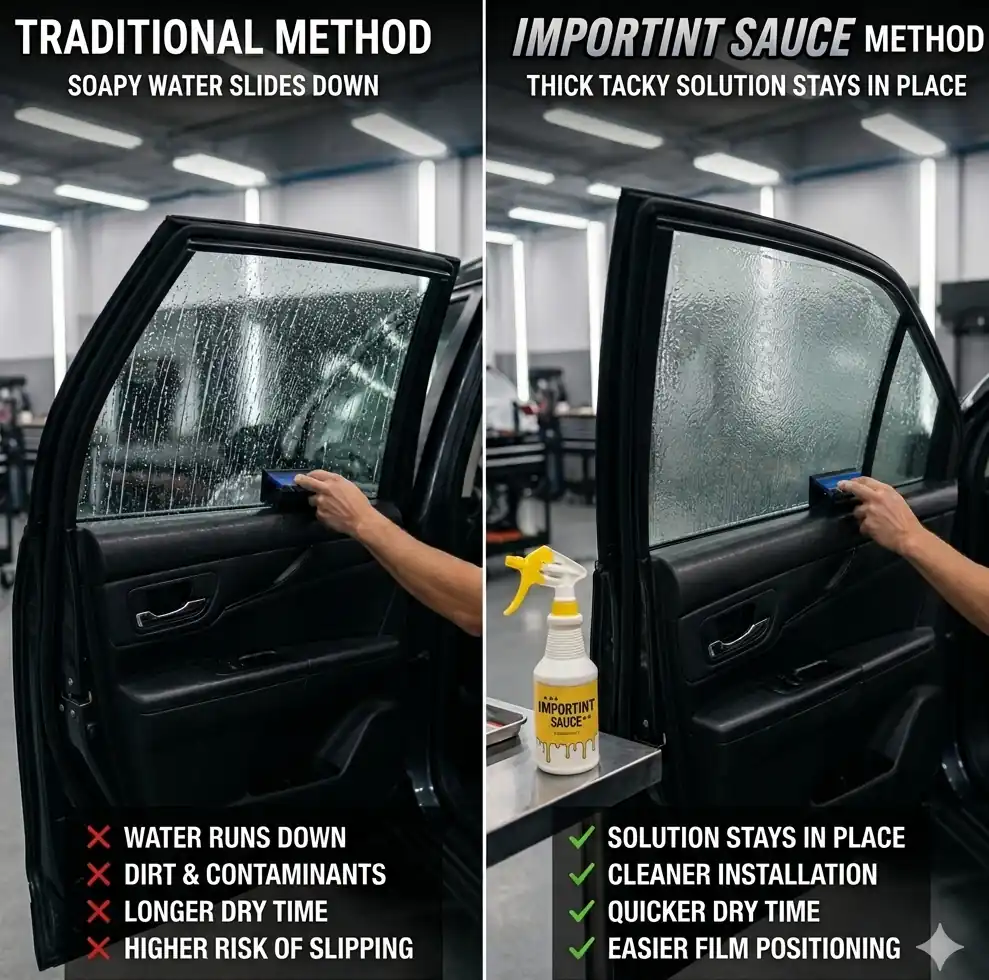
Tack solutions are a newer product type. They are built for the exact spots where slip solutions fail. Instead of making the glass slippery, a tack solution uses a thicker, sticky formula. It holds the film in place after each squeegee pass.
In fact, ImporTint Sauce is the leading product in this category. It was developed by professional window tint installers. It solves the specific problems that slip solutions cannot: dot matrix adhesion, edge dirt, and film lifting.
PROS
- Locks film edges against dot matrix and seals without sanding
- Controls dirt by stopping dust and water from creeping under film edges
- Furthermore, stays where you spray it — does not run or dry out like slip solutions
- Flattens stubborn dot matrix without abrasive prep
- Water-based, colorless, odorless, non-toxic, and leaves no residue
CONS
- Not designed for full-window slip — use alongside a slip solution for positioning
- However, it is a newer product type, so it is less widely known than traditional slip solutions
Ultimately, best for dot matrix areas, quarter windows, deep seals, french panes, side mirrors, and any spot where edge control and clean installs matter most.
Installation Gels: PPF and Specialty Film
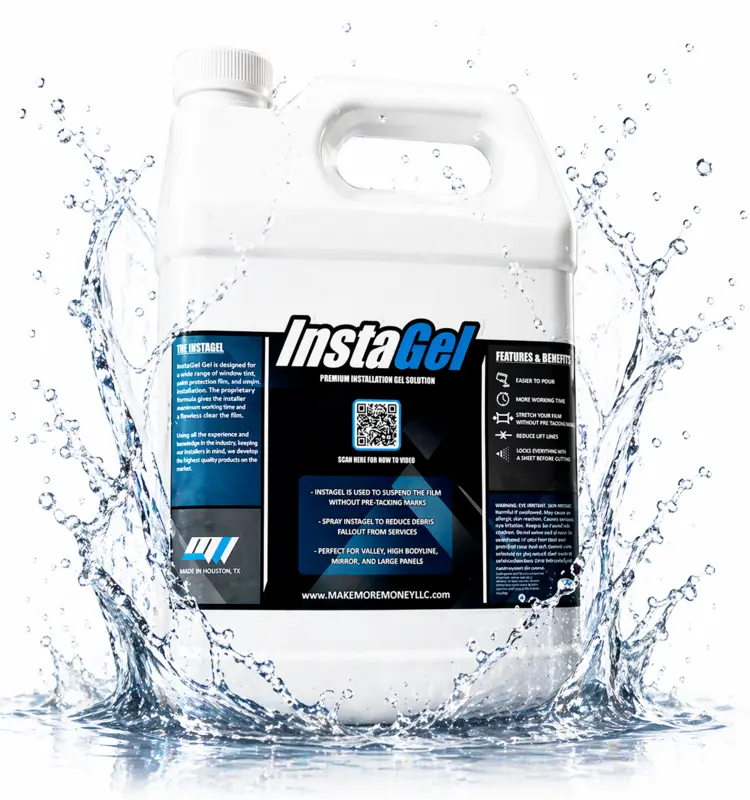
Installation gels like InstaGel are made for paint protection film (PPF), not window tint. PPF is different from tint. The film needs to be stretched, moved around, and pressed onto painted body panels instead of glass.
Specifically, InstaGel provides extended working time by slowing evaporation. It allows stretching and repositioning without pre-tack marks. It also traps particles before they get sealed under the film.
PROS
- Extended working time for large PPF panels
- Enables film stretching without pre-tack marks
- In addition, the oil-free formula flushes clean with distilled water
- Suitable for mirrors, curves, and intricate surfaces
CONS
- Too thick for standard window tint work
- Designed for PPF adhesives, not window tint adhesives
Best for: PPF installation on body panels, bumpers, hoods, mirrors, and any surface where extra working time and stretch are needed.
Quick Comparison
| Feature | Slip Solution | Tack Solution | Installation Gel |
| Primary Use | Film positioning | Edge sealing & dot matrix | PPF installation |
| Consistency | Thin / watery | Thick / tacky | Gel / viscous |
| Dot Matrix | Poor | Excellent | Not designed for |
| Edge Control | None | Excellent | Good (PPF only) |
| Working Time | Short | Medium | Extended |
| Best Product | Tint Slime / Tint-Tac | ImporTint Sauce | InstaGel |
The Best Window Tint Installation Solution Setup for Professionals
Most pro tint shops do not use just one product. The best setup pairs a slip solution for moving the film into place with a tack solution for locking down the edges and dot matrix. As a result, this two-product approach gives you the best of both worlds: easy repositioning where you need it, and rock-solid adhesion where it counts.
Choosing the best window tint installation solution depends on the job at hand. For flat glass, use a slip. For edges and dot matrix, use a tack. For PPF, use a gel.
Similarly, for shops that also install PPF, adding a gel like InstaGel to the toolkit covers all three use cases: window tint, dot matrix, and paint protection film.
Available from Pioneers Distribution
ImporTint Sauce, InstaGel, and InstaSlip are all sold at wholesale dealer prices through Pioneers Distribution. Sign up as a dealer to see pricing and start ordering.
Related guides & products
- ImporTint Sauce — tack solution for dot matrix
- InstaSlip slip solution — oil-free slip for PPF and tint
- PPF gel vs slip solution — which to use and when
See the full kit: our guide to PPF & window tint installation tools covers every squeegee, blade and install solution a pro needs.
Choosing tint film too? Compare ceramic vs carbon vs dyed window tint before you buy.
Working on hot glass in summer? Add TackStop tack control solution to your slip mix to slow evaporation and get 3–5x more working time before the film grabs.
The install solutions
Match the fluid to the job — most pro shops keep all four on the shelf:
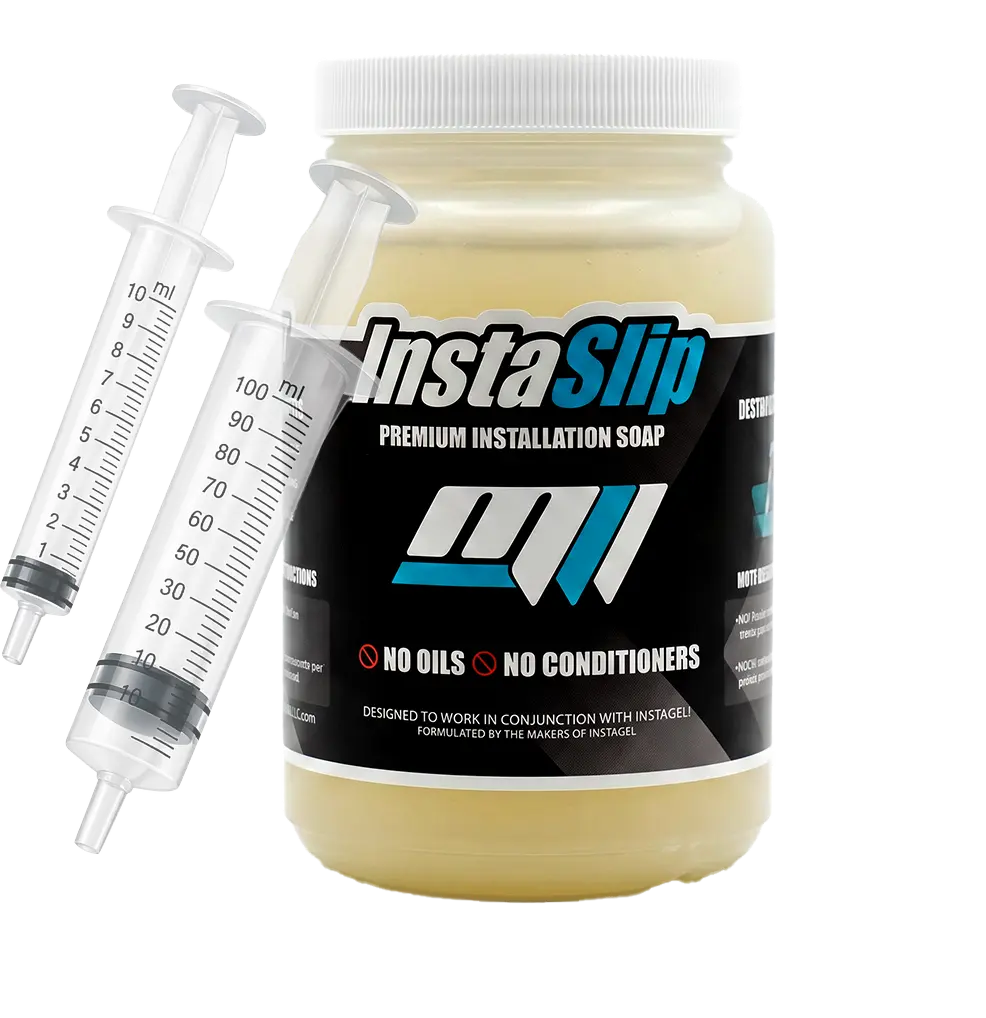 InstaSlipOil-free slip — slide film into position, flush clean, zero residue.$23.99Shop →Installation Gel
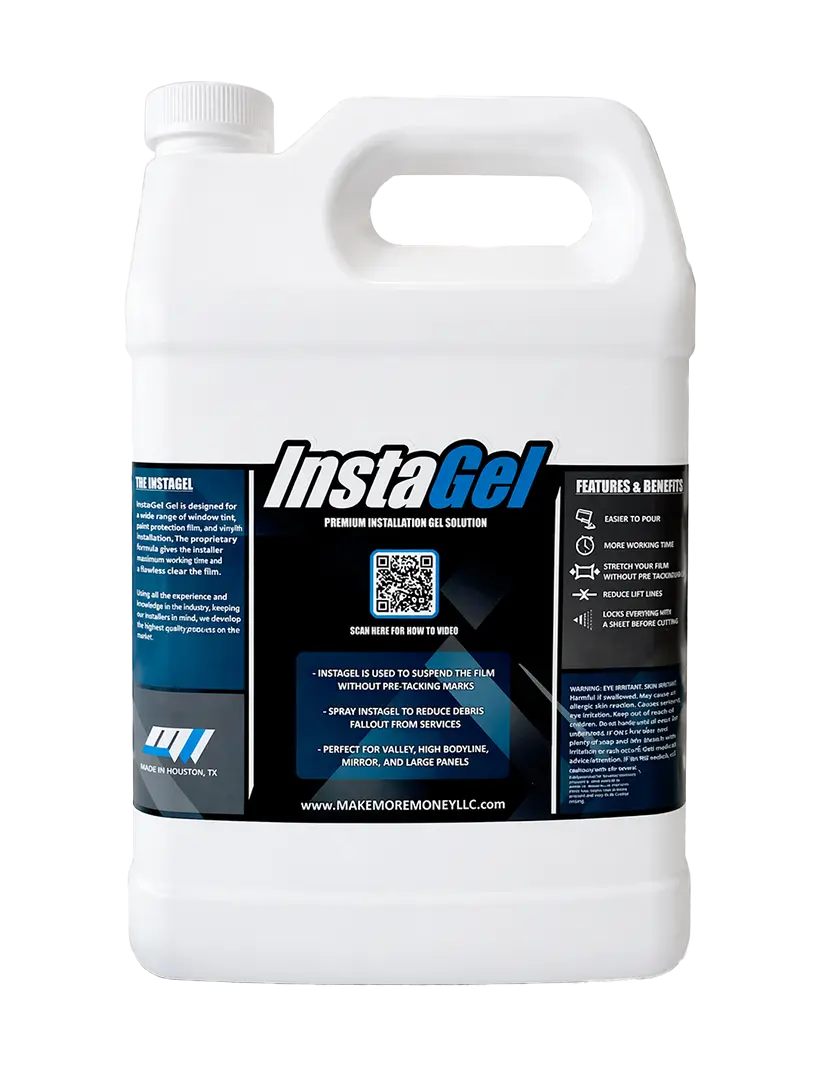 InstaGelControlled slip for big PPF panels — no silvering, no lift lines.$32Shop →Tack Solution
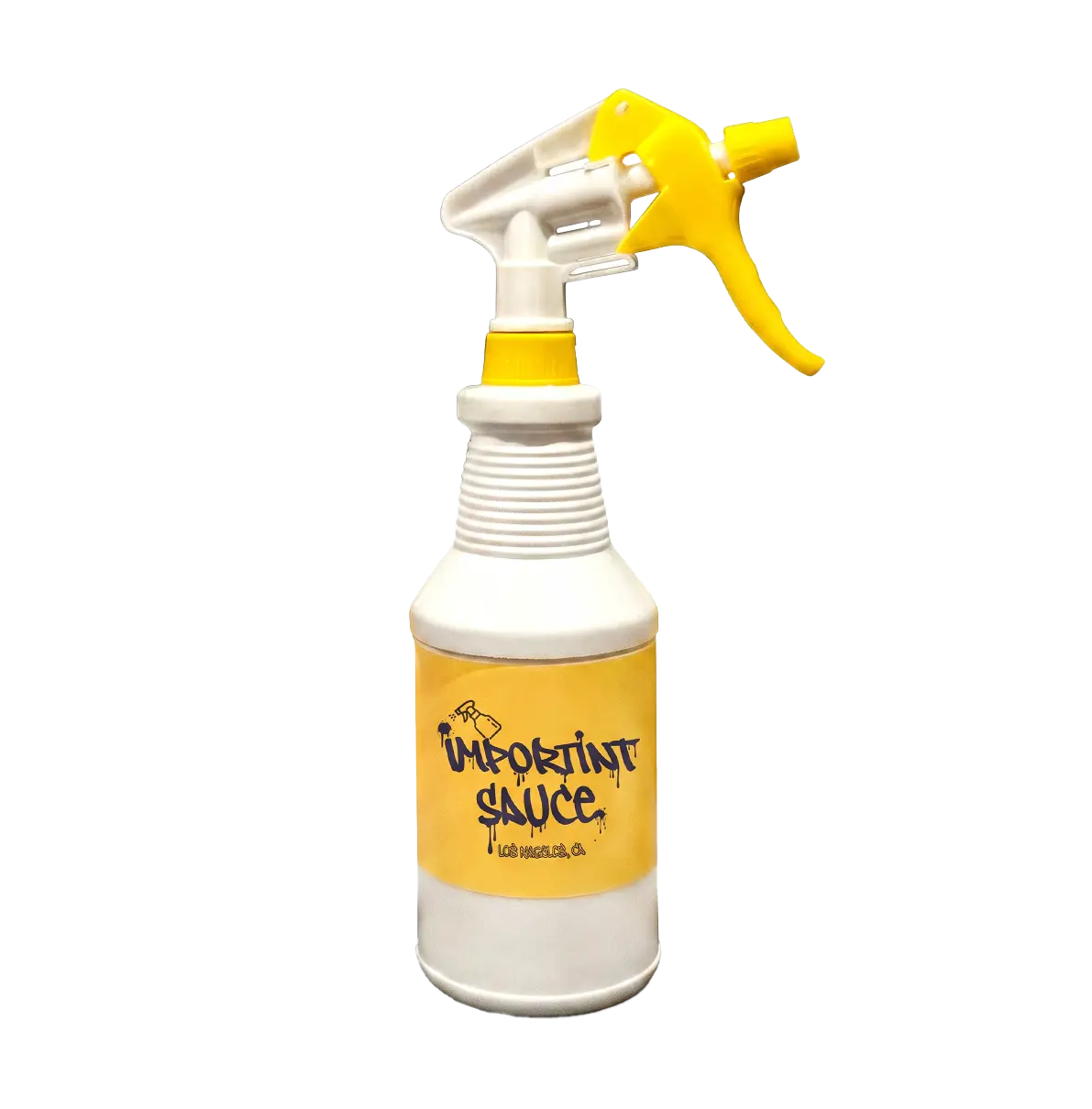 ImporTint SauceMakes edges grab — the go-to for dot-matrix borders.$30Shop →Tack Control
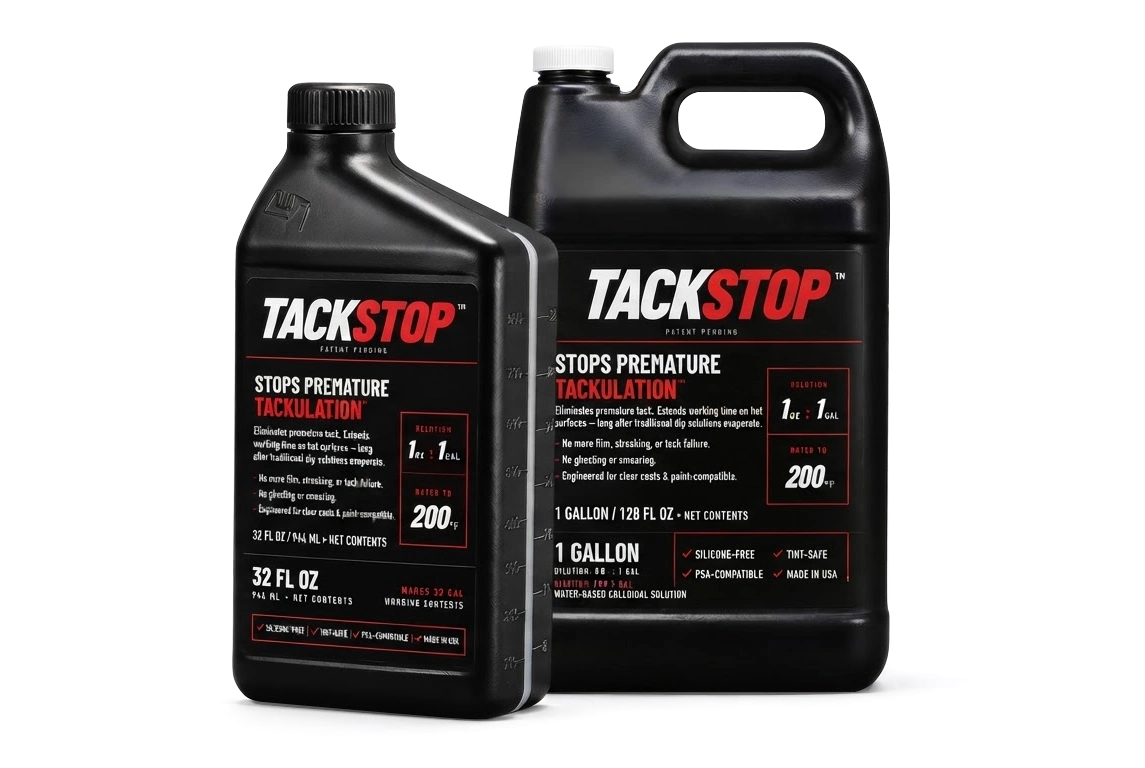 TackStop – Window Film Tack Control SolutionStops premature tack on hot glass — 3–5× more working time.$27Shop →
Stock the fluids that make installs bulletproof
Slip, tack, gel and tack-control solutions at dealer pricing, shipped nationwide.
Shop Install Solutions