



Color PPF and vinyl wrap both let you change how your car looks without a repaint — but only one of them is also built to protect the paint underneath. If you’re choosing between the two for 2026, the decision comes down to six factors: protection, lifespan, cost, reversibility, appearance, and install difficulty.
What this guide covers
- Protection: Only One of These Is Built to Take a Hit
- Lifespan: 7-10 Years vs 3-5 Years
- Cost: Vinyl Wrap Wins Upfront
- Reversibility: Both Come Off, But Not Equally Cleanly
- Appearance: Wrap Wins on Variety, PPF Wins on Finish Quality
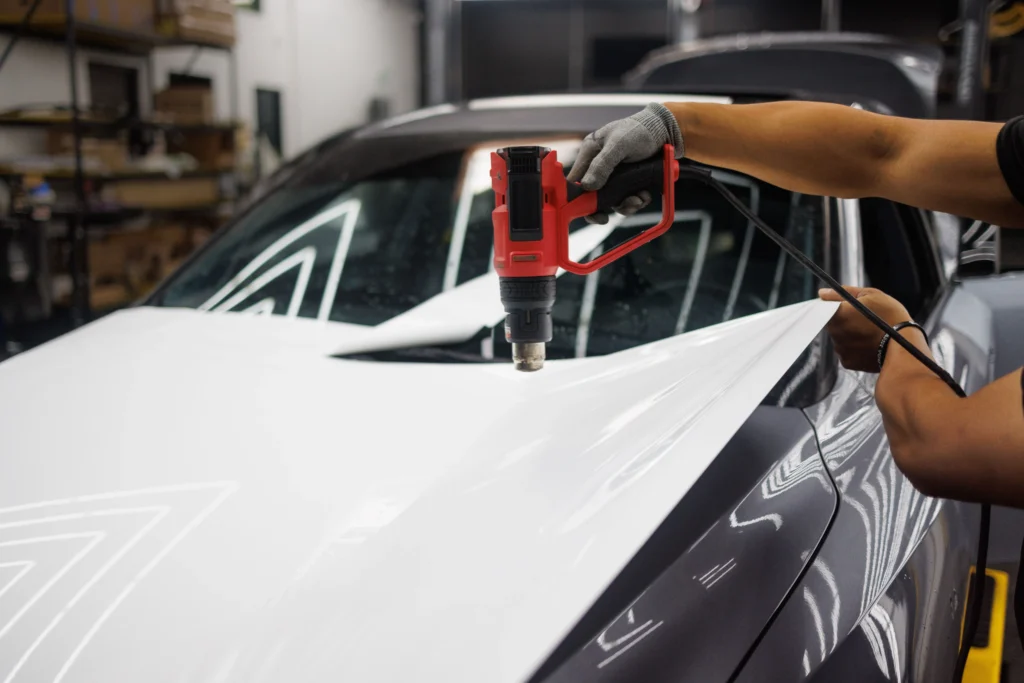
Protection: Only One of These Is Built to Take a Hit
Color PPF is a thermoplastic polyurethane (TPU) film roughly 8 mil or thicker, engineered to absorb impact and resist rock chips, road debris, and abrasion — the same protective base used in clear paint protection film, just with a pigmented topcoat. Vinyl wrap is a cosmetic vinyl film, typically 3-4 mil thick, with no meaningful impact resistance. It changes the color; it does not protect the paint from chips or scratches.
Lifespan: 7-10 Years vs 3-5 Years
Quality color PPF typically lasts 7-10 years with proper care. Vinyl wrap commonly starts fading, lifting at the edges, or losing gloss within 3-5 years, especially with consistent sun exposure. If you plan to keep the car long-term, color PPF’s lifespan does a lot of the cost justification on its own.
Cost: Vinyl Wrap Wins Upfront
Vinyl wrap is generally cheaper upfront — less material, faster install in most cases. Color PPF costs more both in material and labor, since panels need to be properly templated and the install is less forgiving of mistakes. The gap narrows when you account for lifespan: a wrap that needs replacing twice over 8 years can end up costing close to what color PPF would have cost once.
| Factor | Color PPF | Vinyl Wrap |
|---|---|---|
| Material thickness | ~8 mil or thicker | ~3-4 mil |
| Impact/chip protection | Yes — primary function | No — cosmetic only |
| Self-healing | Yes, with heat | No |
| Typical lifespan | 7-10 years | 3-5 years |
| Reversibility | Clean removal, low residue risk | Higher risk of residue/paint damage, especially after a few years |
| Finish options | Gloss, satin, matte, prismatic | Widest range, including printed/custom graphics |
| Install difficulty | Higher — less forgiving, fewer experienced installers | Lower — more installers, faster turnaround |
| Typical cost | Higher | Lower |
Reversibility: Both Come Off, But Not Equally Cleanly
Both products are removable, leaving the factory paint underneath. Color PPF, properly installed and removed, tends to come off cleanly with low residue risk. Vinyl wrap is also reversible when fresh, but the longer it stays on — especially past 3-4 years or in hot climates — the more likely removal leaves adhesive residue or, in rare cases, lifts clear coat. For leased vehicles or owners who change their mind often, fresher installs of either material are easier to remove than older ones.
Appearance: Wrap Wins on Variety, PPF Wins on Finish Quality
Vinyl wrap has the wider catalog — printed patterns, textures, and custom graphics that color PPF doesn’t offer. But color PPF finishes (gloss, satin, matte, prismatic/color-shifting) tend to look smoother panel-to-panel, without the orange-peel texture some wraps show, and the self-healing topcoat keeps minor swirl marks from accumulating the way they can on wrap.
Install Difficulty: PPF Demands More From the Installer
Color PPF is less forgiving to install than vinyl wrap — color and finish consistency across panels depends heavily on installer experience with that specific film, and mistakes are harder (and more expensive) to redo. Vinyl wrap has a larger pool of experienced installers and a faster typical turnaround. If you’re choosing color PPF, ask specifically how many color PPF installs (not just clear film or wrap) the shop has completed.
Which Should You Choose?
If protecting the paint matters as much as changing its look — or you’re keeping the car for several years — color PPF is the more defensible long-term choice. If you want the widest range of finishes, a lower upfront cost, or you change vehicle styling often, vinyl wrap still makes sense.
If color PPF is the right fit, browse the XPEL color PPF range to see current finish and color options, or contact Pioneers Distribution to locate an authorized installer near you.
For more on what color PPF offers on its own, see why color PPF is the ultimate car protection choice, our color PPF maintenance guide, or browse the NANOlink color PPF line available through Pioneers Distribution.
Frequently Asked Questions
Is color PPF more durable than vinyl wrap?
Yes. Color PPF is thicker, self-healing, and typically lasts 7-10 years versus 3-5 years for vinyl wrap.
Which costs less, color PPF or vinyl wrap?
Vinyl wrap costs less upfront. Color PPF costs more but lasts longer, which can close the cost gap over time.
Can both be removed without damaging factory paint?
Yes, when installed and removed correctly and within their expected lifespan. Older or sun-damaged installs of either material carry higher removal risk.
Does vinyl wrap protect against rock chips?
No. Vinyl wrap is cosmetic only and offers no meaningful impact or chip protection, unlike color PPF.
Shop paint protection film
Every finish, in stock at dealer pricing:
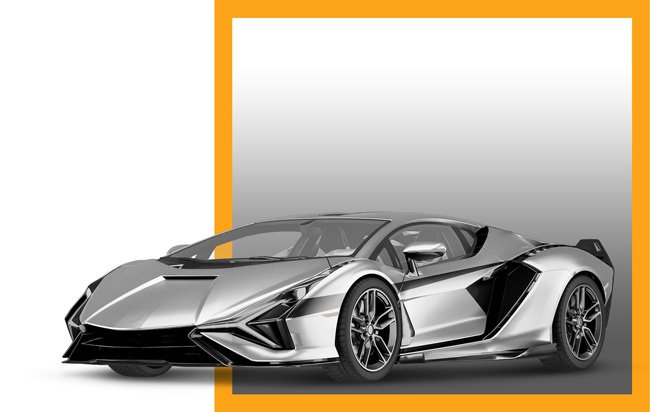 NanoTek Prime Clear Gloss PPFNanoTek Prime — self-healing gloss, invisible factory-paint protection.$150Shop →Matte / Satin
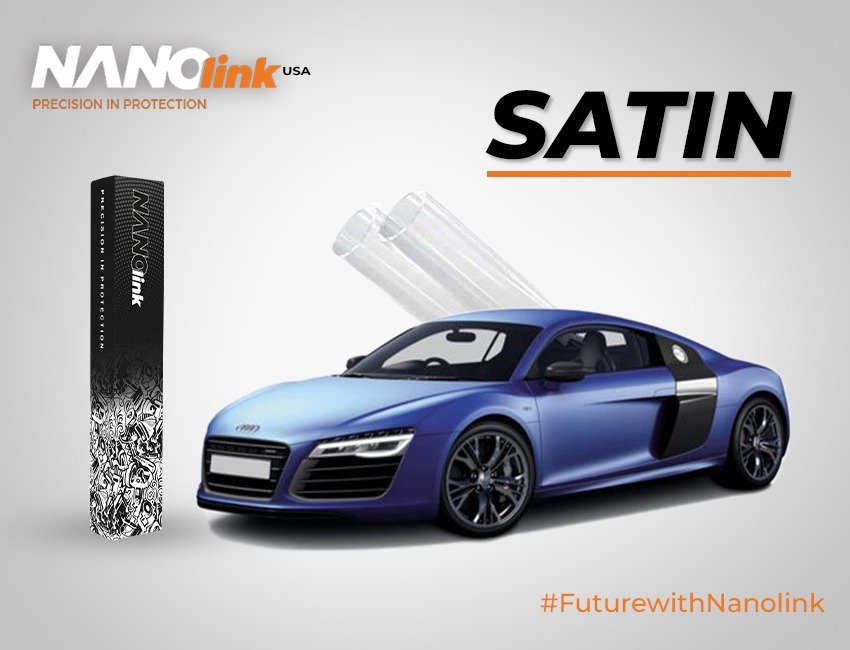 NANOlink Matte PPFNANOlink Matte — factory-matte look with full protection.$258Shop →Colored
 Matte Black Color PPF TPJ-09Color change and protection in one self-healing film.$150Shop →Premium
 NanoTek DiamondNanoTek Diamond — flagship clarity, thickness and durability.$480Shop →
Protect it with premium PPF
Gloss, matte and colored paint protection film at wholesale dealer pricing.
Browse PPF FilmsNew guides: the complete color PPF guide and prismatic & color-shift PPF.