



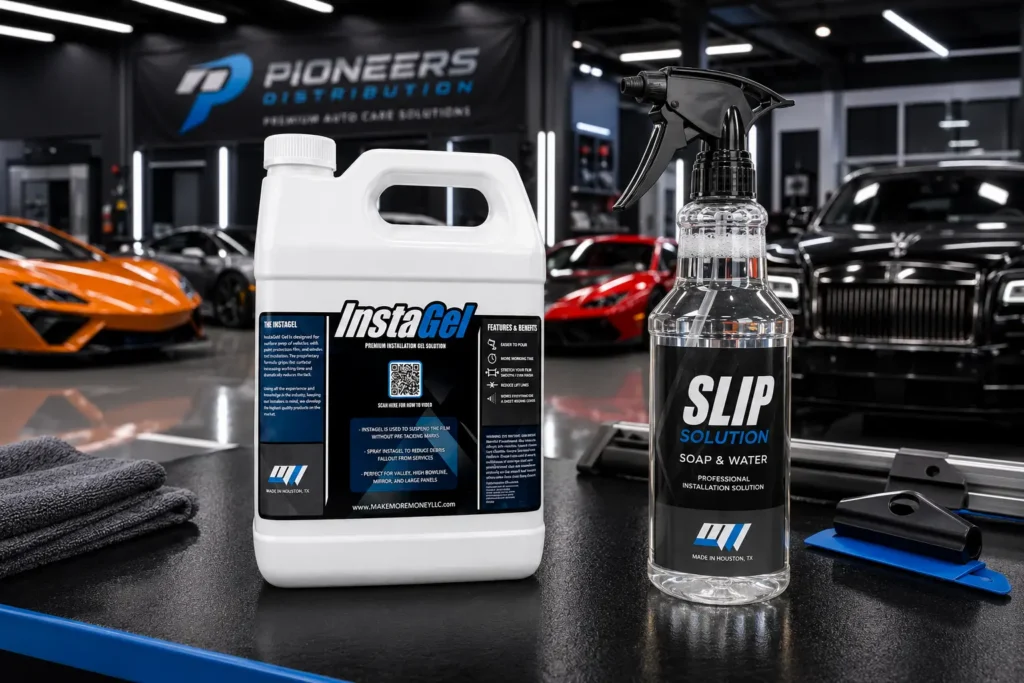
Every PPF installer eventually faces the same question: what should I spray on the paint before laying film? For most beginners, the answer seems simple — just mix some baby shampoo with water and go. However, professional installers are increasingly switching to gel-based mounting solutions, and the results speak for themselves.
What this guide covers
- Understanding the Two Types of PPF Mounting Solutions
- Head-to-Head Comparison
- When to Use Each Solution
- Product Comparison: InstaGel vs 3M Gel vs Jelly Fresh
- The Cost Argument: Why Gel Pays for Itself
In this guide, we will break down the real differences between a PPF installation gel and a traditional slip solution. More importantly, we will explain when each one is the right choice and how you can use them together for the best results.
Understanding the Two Types of PPF Mounting Solutions
Before we compare them, let’s first understand how each type works and what it does during installation.
What Is a Slip Solution?
A slip solution is any liquid mixture that creates a lubricated barrier between the PPF adhesive and the painted surface. In most cases, installers use baby shampoo diluted with water at a ratio of roughly 1:10 to 1:20.
Here is how it works: the surfactants in the soap reduce surface tension on the paint. As a result, the adhesive does not bond immediately. This gives you time to slide and position the film before you squeegee the solution out to activate the bond.
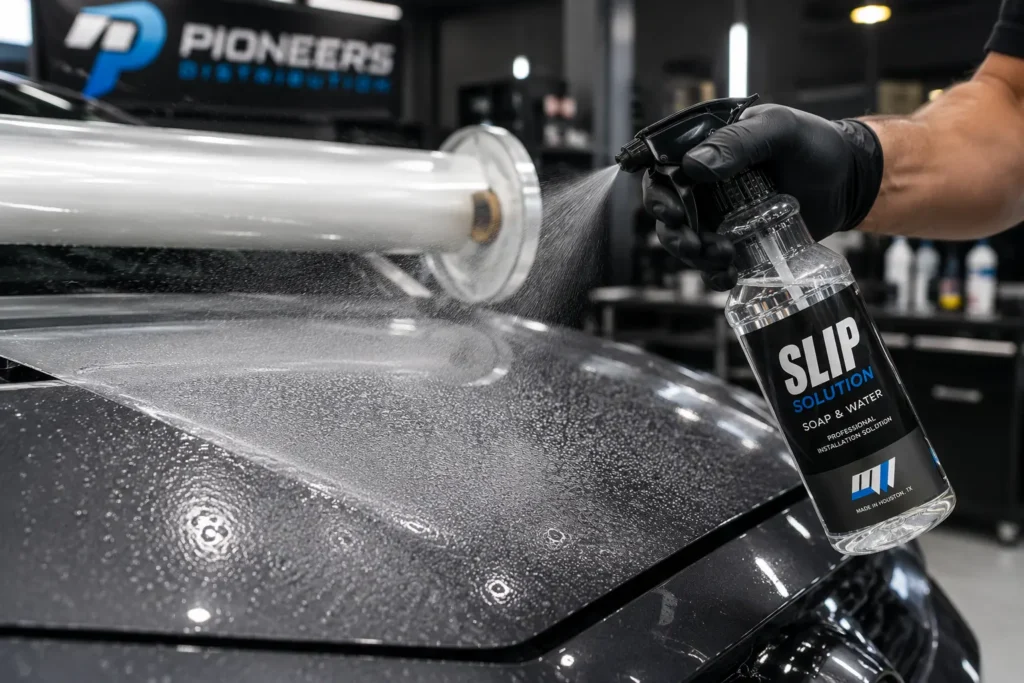
What’s good about slip solutions:
- They are extremely cheap — a bottle of baby shampoo costs a few dollars and lasts for months
- In addition, they are simple to mix with no special products needed
- They also provide generous slip for initial positioning, especially on large flat panels
What’s not so good:
- They evaporate quickly, particularly in warm environments
- Furthermore, the tack transition is unpredictable — you cannot control exactly when bonding starts
- They offer absolutely zero debris management, so particles float freely under the film
- They can also gum up under the film if your mix ratio is slightly off
- Finally, they run off vertical surfaces almost immediately due to low viscosity
What Is a PPF Installation Gel?
A PPF installation gel is a purpose-engineered, viscous mounting solution designed specifically for paint protection film. Products in this category include InstaGel, 3M PPF Installation Gel, Jelly Fresh, Scorpion PPF Gel, and Global PPF Gel.
Here is how it works: gels provide controlled lubricity with a predictable transition from slip to tack. Because of their thick consistency, they cling to surfaces — including vertical panels — and evaporate much more slowly than water-based solutions. In addition, the viscosity traps debris and carries it out during squeegeeing.
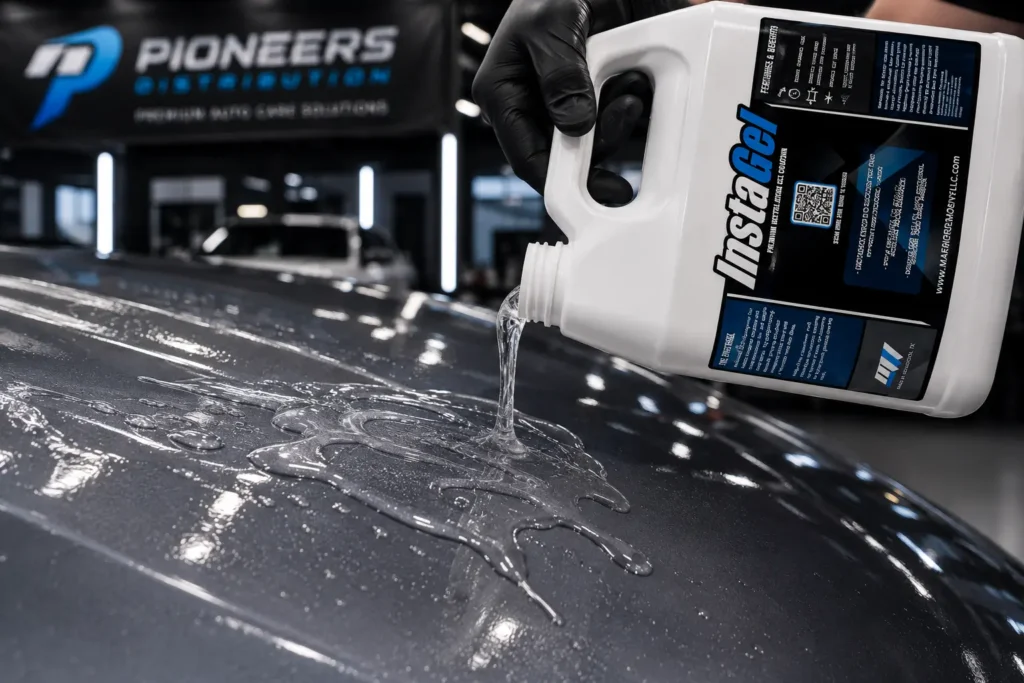
What’s good about PPF installation gel:
- Extended working time because the gel evaporates much slower than soap and water
- Additionally, the slip-to-tack transition is controlled and consistent every time
- Built-in debris management means particles get trapped in the gel and squeegeed out
- It also works well on vertical surfaces because it does not drain away under gravity
- As a result, PPF silvering and lift lines are significantly reduced
- Most brands are ready to use straight from the bottle — no mixing required
What’s not so good:
- Higher cost per gallon — typically $30 to $40 compared to a few dollars for soap
- Also, some gels can provide too much tack if you over-apply them on certain PPF brands
- They are not available everywhere and usually need to be ordered from specialty distributors
Head-to-Head Comparison
Now let’s put them side by side so you can see the differences clearly.
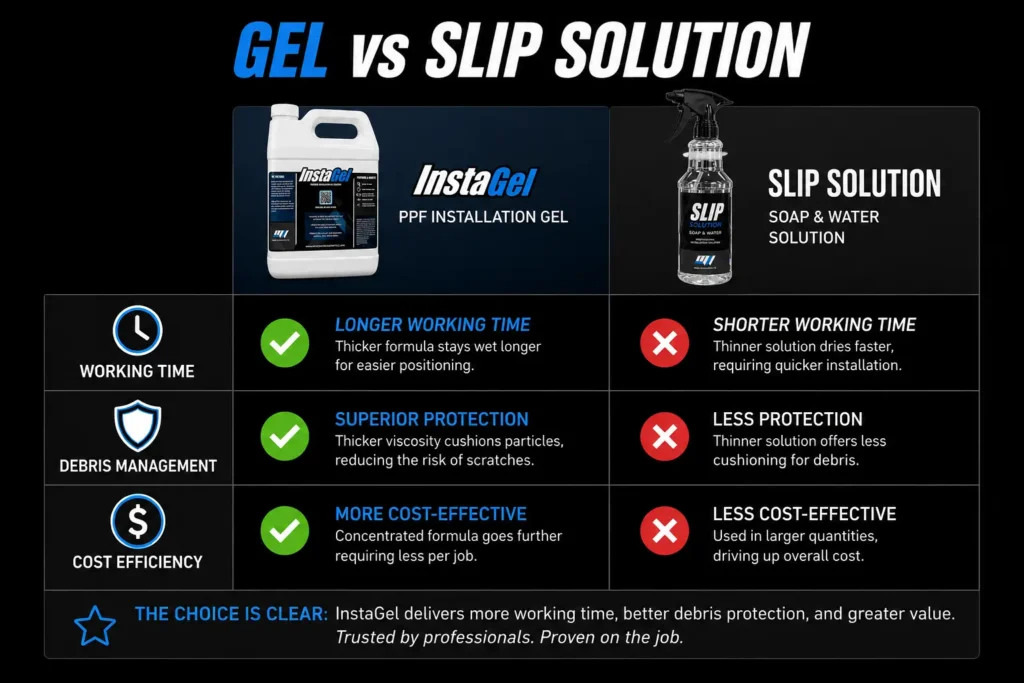
| Factor | Slip Solution (Soap) | PPF Installation Gel |
|---|---|---|
| Cost per gallon | $1–2 (mixed) | $30–40 |
| Working time | 2–5 minutes (varies a lot) | 8–15 minutes (consistent) |
| Debris management | None at all | Traps and removes particles |
| Vertical surfaces | Poor — drains away fast | Good — clings to the surface |
| PPF silvering risk | High | Low |
| Lift line risk | High | Low |
| Mixing required | Yes (ratio matters) | No (ready to use) |
| Residue risk | Moderate if ratio is wrong | Low |
| Best for | Budget installs and flat panels | Professional installs and complex curves |
As you can see, the gel wins in almost every performance category. However, slip solutions still have their place — especially for budget-conscious installers or simple flat panel work.
When to Use Each Solution
Knowing which product to reach for depends entirely on the job at hand. Here is a simple breakdown.
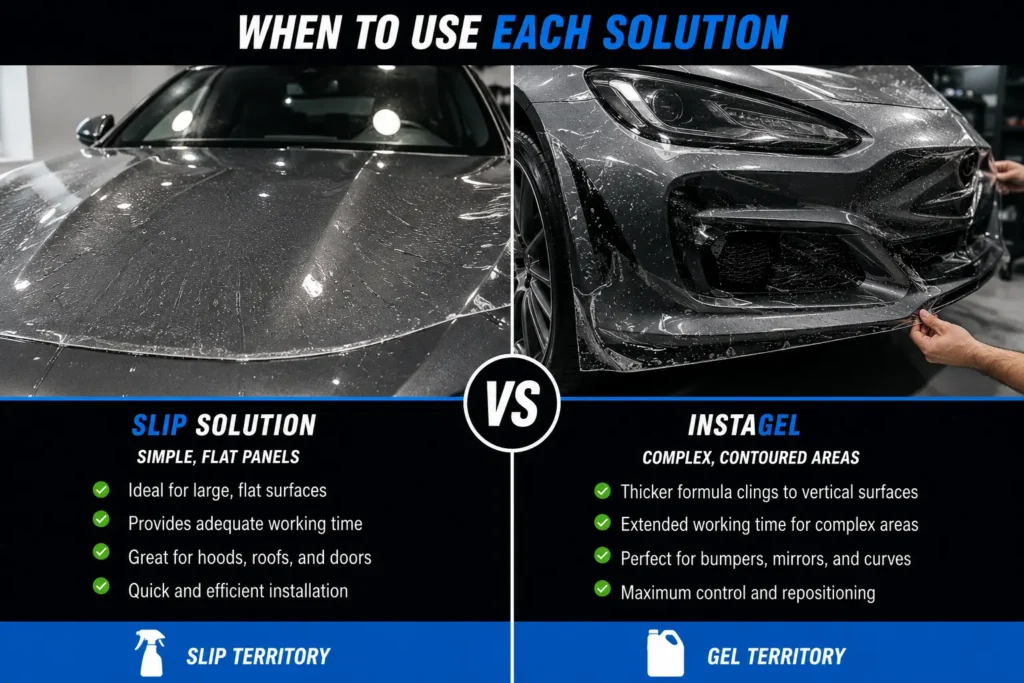
Use a Slip Solution When:
- You are doing a flat, simple panel like a straight hood or roof where positioning is easy
- Also, if you are still training and want to practice before investing in more expensive products
- Or if budget is your primary concern and you are willing to accept a higher defect rate
Use a PPF Installation Gel When:
- You are working on high-value vehicles where any defect is unacceptable
- The install involves compound curves, mirrors, bumper wraps, or high body lines
- You are working in a warm environment where solutions tend to dry too quickly
- Additionally, when debris management is critical — for example, in dusty shops or mobile installations
- In short, whenever you want consistent and predictable results on every single install
Use Both Together (Advanced Technique):
Interestingly, many professional installers do not choose one or the other. Instead, they use both together. Here is how it works:
First, apply your slip solution for the initial rough positioning on large panels. This gives you maximum slip to get the film in the right spot. Then, switch to a PPF installation gel for the final squeegeeing and edge work. As a result, you get the generous slip of soap for placement combined with the controlled tack and debris management of gel for the critical finish.
In other words, think of it this way: slip solution is your positioning tool, and the gel is your finishing tool.
Product Comparison: InstaGel vs 3M Gel vs Jelly Fresh
If you have decided to try a PPF installation gel, here is how the top three products compare against each other.
| Feature | InstaGel | 3M PPF Gel | Jelly Fresh |
|---|---|---|---|
| Created by | Mike Norng (installer) | 3M Corporation | Wrap Fresh |
| Ready to use | Yes | Yes | No (1:5 dilution) |
| PPF + Tint compatible | Yes | PPF only | PPF only |
| Price per gallon | ~$32–37 | ~$30 | ~$35 |
| Working time | Extended | Moderate | Extended |
| Debris management | Strong (high viscosity) | Moderate | Good |
| Availability | Specialty distributors | Wide but often out of stock | Direct from brand |
| Best for | All-around PPF and tint work | Installers in the 3M ecosystem | PPF-only shops |
What makes InstaGel stand out is that it was developed by an actual installer — not a corporation. As a result, the formula is designed around real-world installation challenges rather than laboratory specifications. Furthermore, it works for both PPF and window tint, which means you only need one product instead of two.
The Cost Argument: Why Gel Pays for Itself
Some installers hesitate at the price — $35 per gallon feels expensive compared to basically free soap and water. However, consider this simple math:
A typical PPF job charges the customer anywhere from $1,000 to $5,000. If a single re-do happens because of PPF silvering or lift lines caused by your slip solution drying too fast, you lose:
- The cost of replacement film (often $50 to $200 depending on the panel)
- One to three hours of additional labor
- And most importantly, your reputation with that customer
By contrast, a gallon of PPF installation gel lasts for dozens of installs and costs about $35. Therefore, it is easily the most cost-effective investment you can make in your toolkit. One prevented re-do pays for an entire year of gel.
The Bottom Line
In conclusion, if you are installing PPF professionally, then a purpose-built PPF installation gel is not a luxury — it is a necessity. The extended working time, debris management, and controlled tack transition eliminate the two most common installation defects and save you money in the long run.
At Pioneers Distribution, we carry InstaGel — a professional PPF installation gel developed by Mike Norng, one of the industry’s most experienced PPF and tint instructors. It provides everything professional installers need: extended working time, debris trapping, and a predictable slip-to-tack transition. InstaGel works just as well for window tint installation as it does for PPF, giving tint installers the same extended working time and clean edge seals.
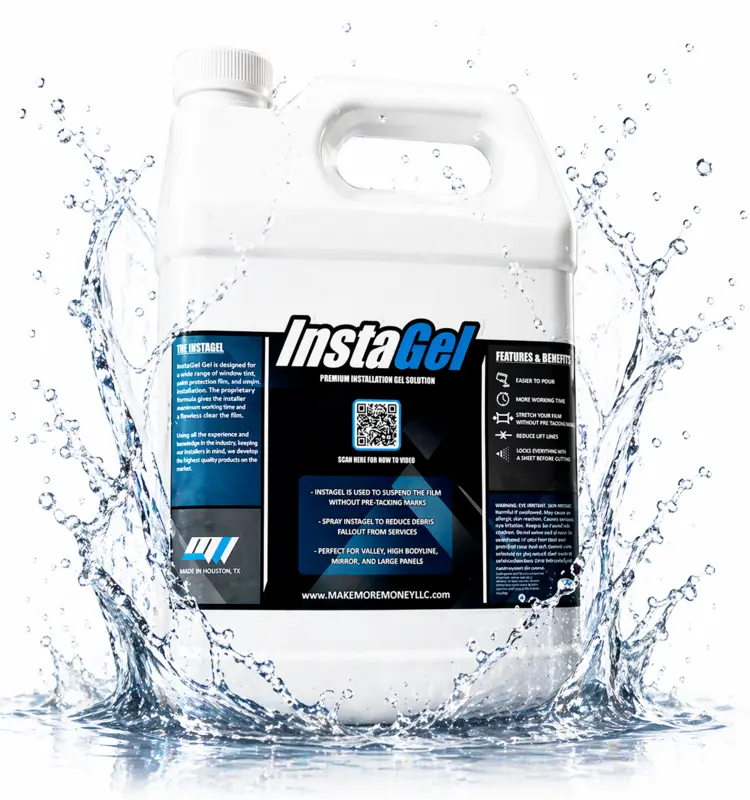
Shop InstaGel at Pioneers Distribution →
If you decide a slip solution is the better fit for a particular job, InstaSlip is our recommended option — an oil-free, conditioner-free formula built specifically for PPF and tint adhesive. Mix 5-8 mL of InstaSlip per 1 gallon of distilled water as a starting point, adjusting in 1 mL increments per gallon until you reach the slip consistency you want.
For tips on preventing the most common PPF defects, also read: How to Prevent PPF Silvering and Lift Lines: A Professional Installer’s Guide
For a complete overview of paint protection film, see our PPF Ultimate Guide.
Related guides & products
- InstaGel installation gel — controlled slip, no lift lines
- best window tint installation solution — slip vs tack vs gel compared
- what is satin PPF — matte paint protection explained
For the full tool list, see our PPF & window tint installation tools guide.
The install solutions
Match the fluid to the job — most pro shops keep all four on the shelf:
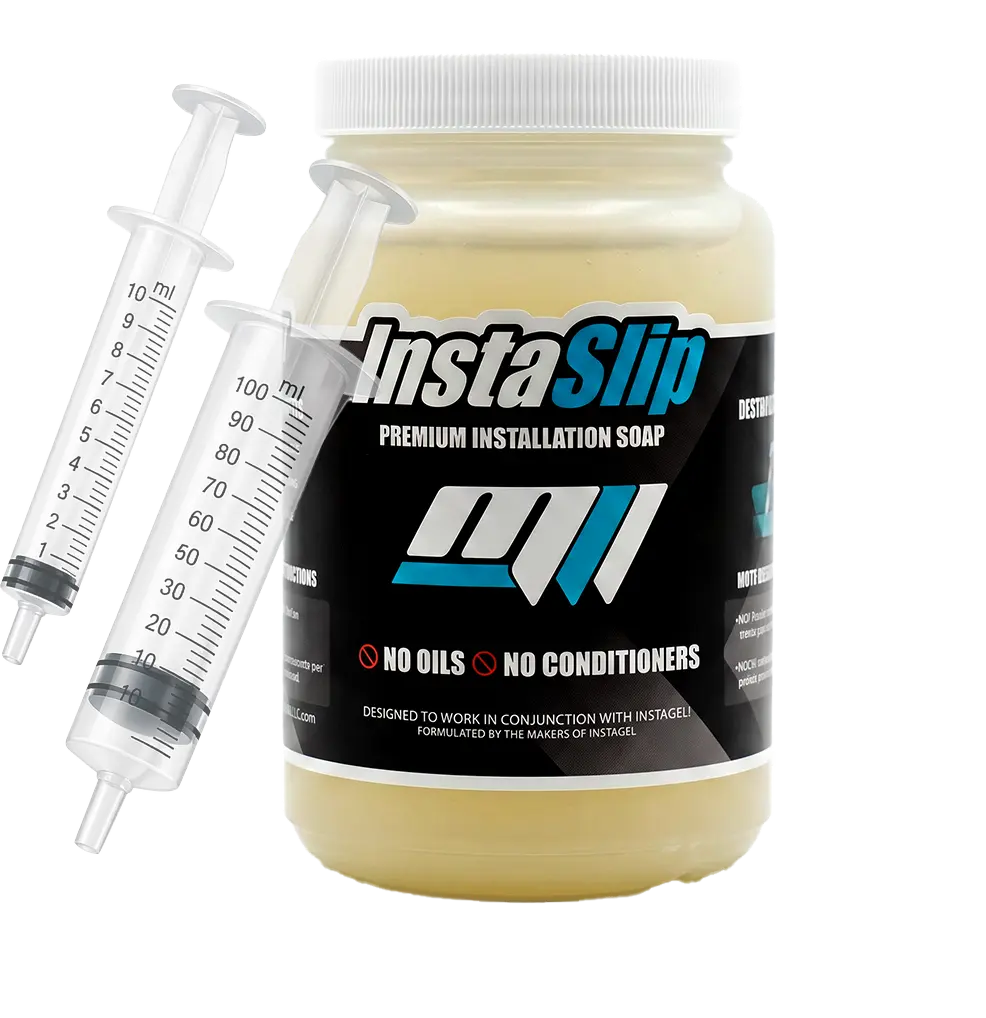 InstaSlipOil-free slip — slide film into position, flush clean, zero residue.$23.99Shop →Installation Gel
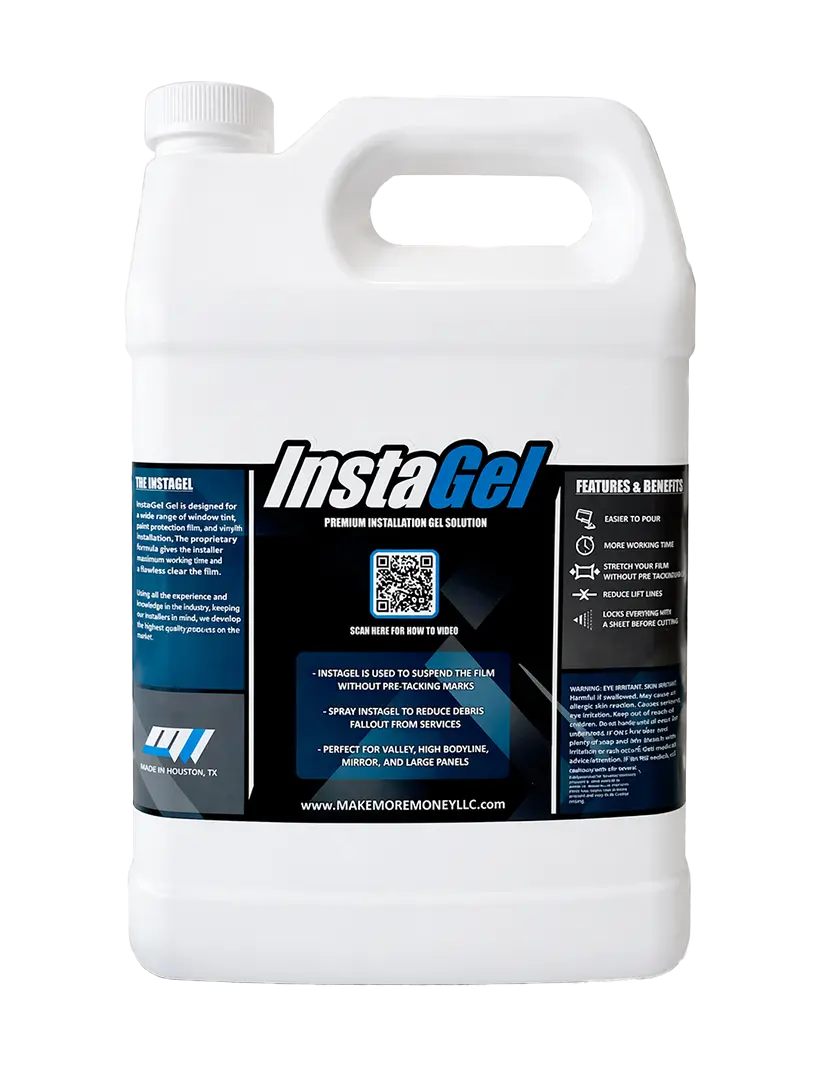 InstaGelControlled slip for big PPF panels — no silvering, no lift lines.$32Shop →Tack Solution
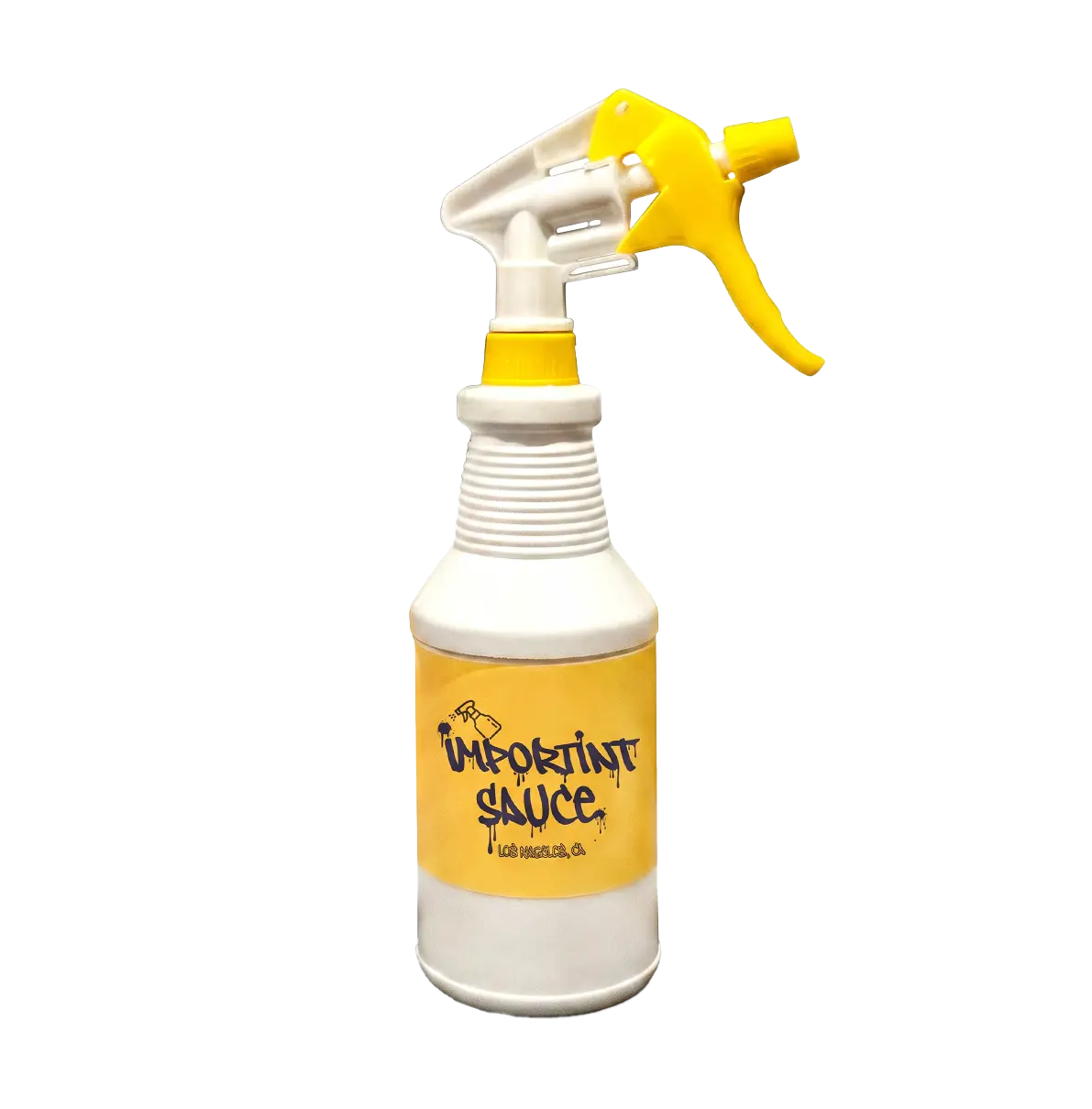 ImporTint SauceMakes edges grab — the go-to for dot-matrix borders.$30Shop →Tack Control
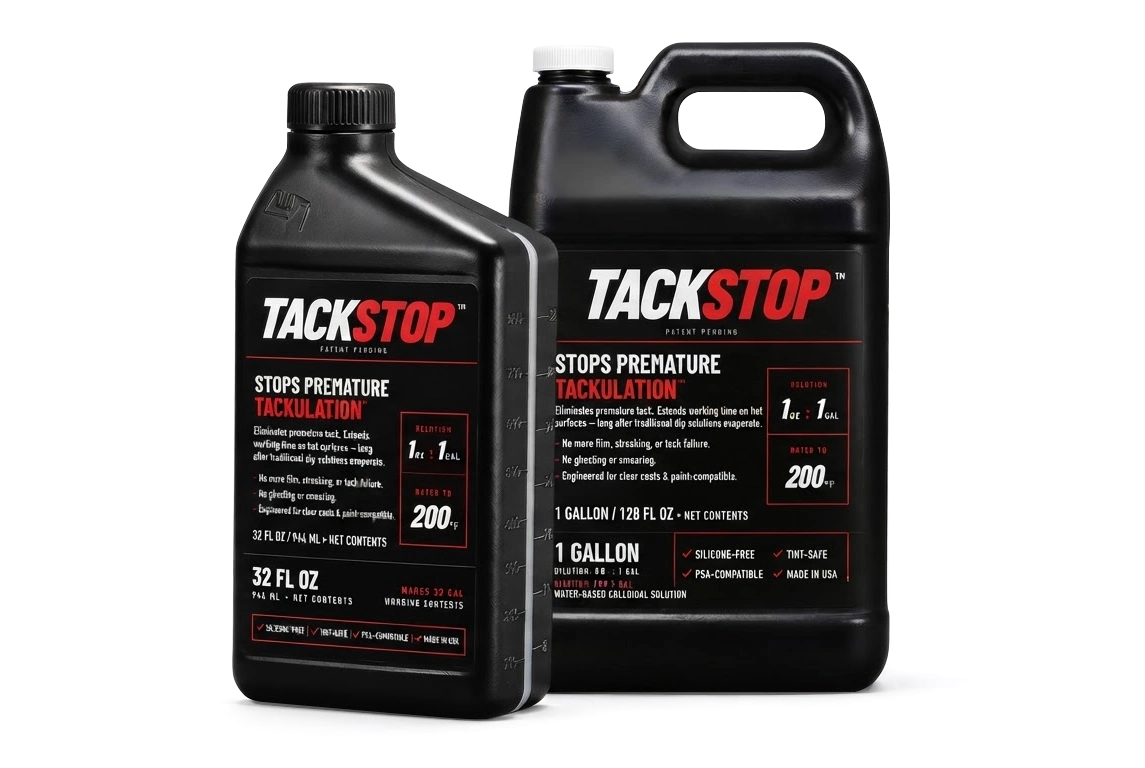 TackStop – Window Film Tack Control SolutionStops premature tack on hot glass — 3–5× more working time.$27Shop →
Stock the fluids that make installs bulletproof
Slip, tack, gel and tack-control solutions at dealer pricing, shipped nationwide.
Shop Install Solutions