




Not all window tint is created equal. Two films can look identically dark yet perform worlds apart — one bakes you in traffic, the other blocks the heat and never fades. This guide explains the three main types of automotive window tint — dyed, carbon, and ceramic — so you can choose the right film for performance, looks, and budget.
The quick version
- Three types: dyed (budget), carbon (best value), ceramic (best heat & UV rejection).
- VLT (darkness) is about looks & legal limits — not heat rejection. A light ceramic beats a dark dyed film.
- Carbon & ceramic are non-metallic: no phone/GPS interference, and they never fade to purple.

The three main types of window tint
| Type | Heat rejection | Signal interference | Fade resistance | Price |
|---|---|---|---|---|
| Dyed | Low | None | Fades over time | $ |
| Carbon | Medium | None | Excellent | $$ |
| Ceramic / nano-ceramic | High | None | Excellent | $$$ |
Dyed window tint
Dyed film is the entry-level option. A dye layer blocks some light and gives a dark, flat look, but it offers limited heat rejection and can fade to purple over years of UV exposure. It is the cheapest way to get a tinted look — best for buyers on a tight budget who mainly want privacy and appearance.
Carbon window tint
Carbon film uses carbon particles instead of dye, so it blocks more infrared heat, resists fading, and keeps a deep matte-black look that does not turn purple. Crucially, carbon does not interfere with phone, GPS, or radio signals. It is the sweet spot for many drivers who want better heat rejection than dyed without a ceramic price tag.
Ceramic & nano-ceramic window tint
Ceramic (nano-ceramic) tint is the top performer. Microscopic ceramic particles reject the most infrared heat and UV while staying optically clear — you get serious heat rejection even at lighter shades, with zero signal interference and no fading. Our NanoTek Prizm Ceramic Plus delivers premium ceramic heat rejection for shops that want a flagship tint.

Ceramic vs carbon: which should you choose?
If maximum heat rejection and long-term clarity matter — hot climates, luxury vehicles, all-day drivers — ceramic is worth the premium. If you want strong performance and looks at a friendlier price, carbon is the smart middle ground. Dyed only makes sense when appearance and budget are the only priorities.
- Best overall / hot climates: NanoTek Prizm Ceramic Plus
- Best value / everyday: NanoTek Prizm Carbon
- Show your customers the difference: Prizm Display Boards
A quick word on tint percentages (VLT)
Tint darkness is measured as VLT (visible light transmittance) — a lower number is darker. VLT is about looks and legal limits, not heat rejection. That is the key insight most buyers miss: a light 50% ceramic film can reject more heat than a dark 20% dyed film. Choose the film technology for performance, and the shade for looks and your state’s legal limit.
Shop window tint film
Carbon and nano-ceramic tint for installers:
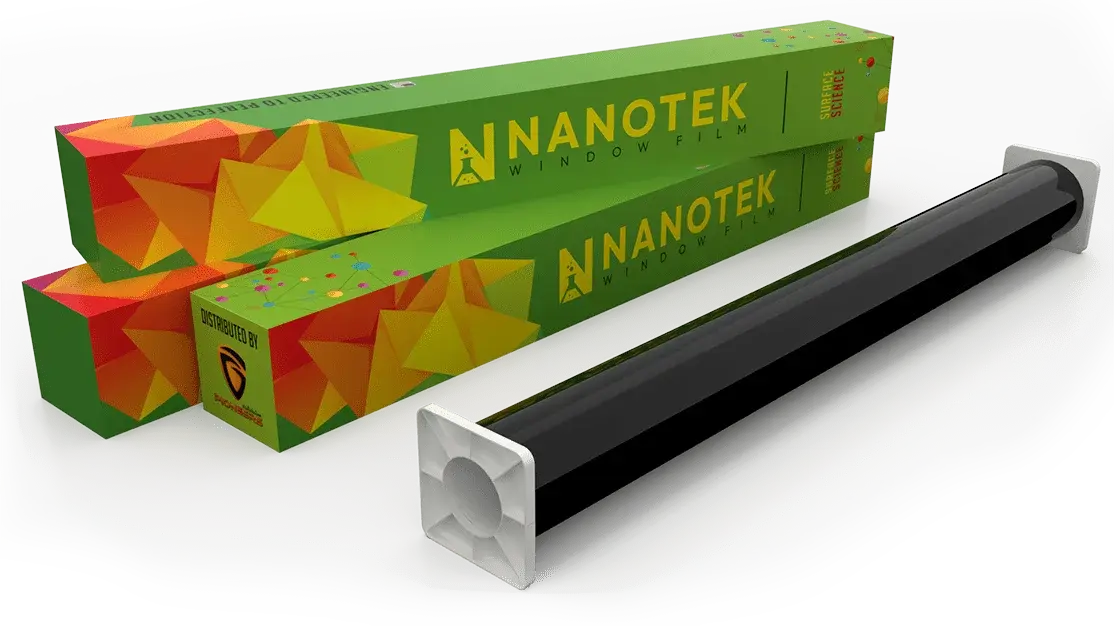 NanoTek Prizm Carbon Window TintNanoTek Prizm Carbon — deep matte look, no signal interference, great value.$145Shop →Nano-CeramicNanoTek Prizm Ceramic Plus Window TintNanoTek Prizm Ceramic Plus — maximum heat & UV rejection, stays clear.$205Shop →Display Boards
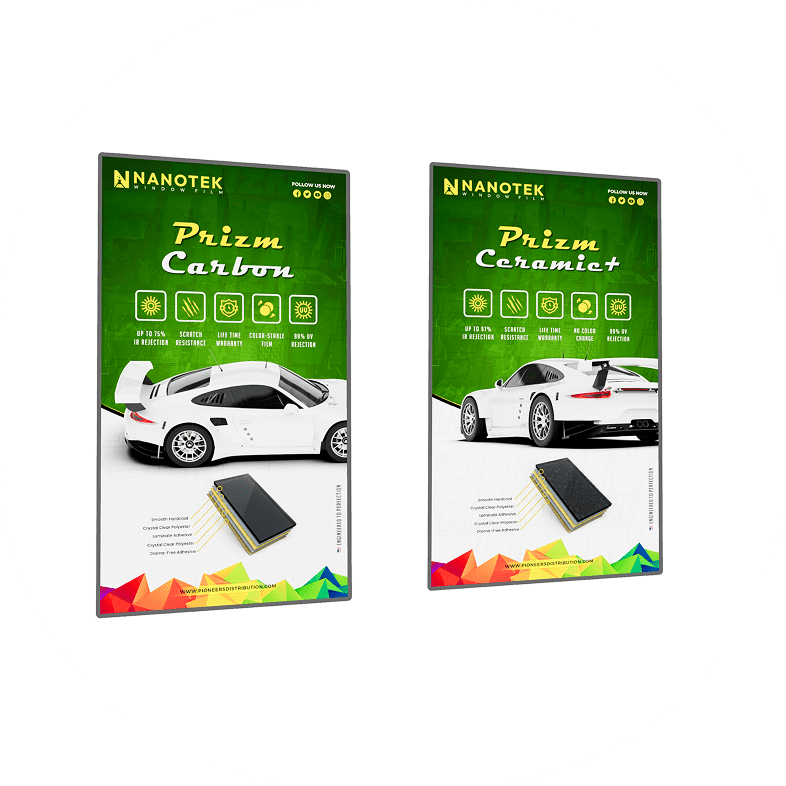 NanoTek Prizm Display BoardsShow customers the difference in the showroom.$150Shop →
Window tint FAQs
Ceramic (nano-ceramic) tint is the best performer for heat and UV rejection with no signal interference. Carbon is the best value; dyed is the budget option.
For heat rejection, longevity, and clarity — yes, especially in hot climates or on vehicles you keep for years. It rejects the most infrared heat and never fades to purple.
Yes. Ceramic particles are engineered to reject infrared (heat-carrying) light while staying clear, so cabins stay noticeably cooler even at lighter shades.
Both resist fading and avoid signal interference, but ceramic rejects more infrared heat and holds clarity better, which is why it sits at a higher price point.
Older metallic films could. Carbon and ceramic films are non-metallic, so they do not interfere with phone, GPS, or radio signals.
Stock premium window tint at wholesale
Pioneers Distribution supplies carbon and nano-ceramic automotive window tint to installers across the USA. Browse the full auto window tint range, and pair it with the right install tools and solutions for a flawless finish.
Stock premium window tint
Carbon and nano-ceramic automotive tint for installers, at wholesale.
Shop Window TintMore window tint guides: what is ceramic window tint, window tint percentages (VLT) explained, and how much window tinting costs.