



“How much does window tinting cost?” The honest answer is that it depends on the film type, your vehicle, how much glass you cover, and the shop. This 2026 guide breaks down realistic window tinting cost ranges so you know what to expect — and, for installers, how to protect your margin with wholesale film.
The quick version
- Cost is driven by film type (dyed, carbon, or ceramic), vehicle size, coverage, and the shop.
- Typical full-car retail: dyed $100–250, carbon $200–400, ceramic $400–800+.
- Ceramic costs the most but rejects the most heat — usually worth it in hot climates.
What affects window tinting cost?
- Film type — the #1 factor. Ceramic > carbon > dyed on both price and performance.
- Vehicle size & glass shape — coupes are cheaper than SUVs and trucks with more/curved glass.
- Coverage — two front windows vs a full vehicle vs a windshield strip.
- Installer skill & warranty — certified shops with lifetime warranties charge more.
- Film quality & brand — premium nano-ceramic film costs more than budget dyed.
Window tinting cost by film type (full vehicle)
These are typical US retail ranges for a full car, professionally installed:
| Film type | Full-car price | Heat rejection | Lasts |
|---|---|---|---|
| Dyed | $100 – $250 | Low | Fades in a few years |
| Carbon | $200 – $400 | Medium | Long-lasting |
| Nano-Ceramic | $400 – $800+ | Highest | Life of the vehicle |
Two front windows only will typically run $50–$150 depending on film; a windshield adds more. SUVs, trucks and vans sit at the higher end because of extra and larger glass.
DIY vs professional tinting
DIY kits are cheap ($30–$100) but hard to get bubble-free, and mistakes can waste film and end up looking worse than factory glass. Professional installation costs more but includes proper prep, cutting, a clean bubble-free finish, and usually a warranty — which is why most drivers go pro, especially for ceramic film.
Is ceramic worth the extra cost?
If you want real heat rejection, UV protection and a film that never fades, ceramic is worth the premium — the difference is felt every hot day. If budget is the only priority and you mainly want a look, carbon is the value pick. See how they compare in ceramic vs carbon vs dyed tint, or learn what makes ceramic tint different.
For installers: buy tint film wholesale
If you install tint for a living, your film cost is what protects your margin. Pioneers Distribution supplies nano-ceramic and carbon automotive tint at dealer pricing, with consistent stock. Become a dealer for a wholesale quote.
Shop NanoTek window tint film
Carbon and nano-ceramic tint for installers, at wholesale:
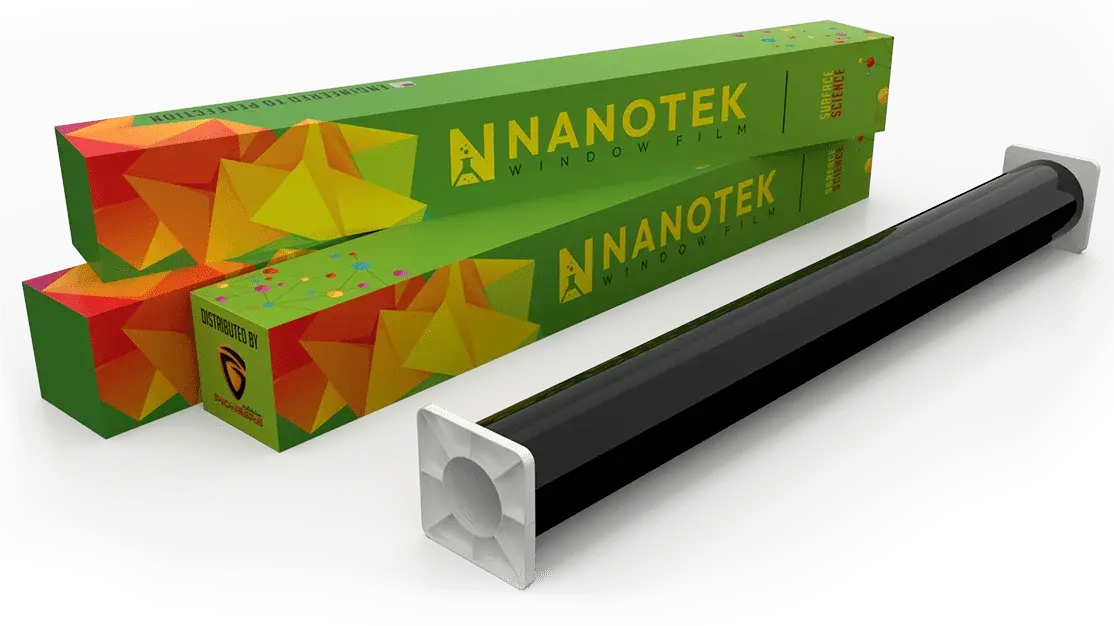 NanoTek Prizm Ceramic Plus Window TintPrizm Ceramic Plus — maximum heat & UV rejection, stays optically clear.$205Shop →CarbonNanoTek Prizm Carbon Window TintPrizm Carbon — deep matte look, no signal interference, great value.$145Shop →Display Boards
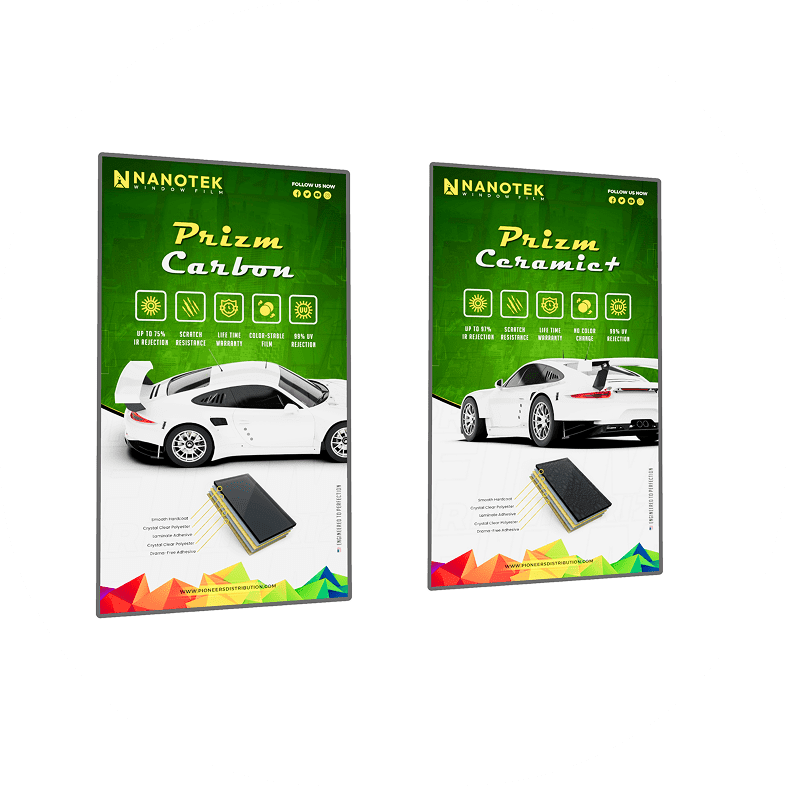 NanoTek Prizm Display BoardsShow customers the shade & heat difference in the showroom.$150Shop →
Window tinting cost FAQs
A full car typically runs $100–$250 for dyed, $200–$400 for carbon, and $400–$800+ for nano-ceramic, professionally installed — more for large SUVs and trucks.
Usually $50–$150 depending on the film type, with ceramic at the higher end.
In hot climates or on a long-term vehicle, yes — it rejects the most heat and UV and never fades, so it pays off over the life of the car.
Yes — larger and more numerous windows (and curved rear glass) take more film and labor, so they sit at the higher end of each range.
Wholesale window tint for installers
NanoTek Prizm ceramic & carbon tint at dealer pricing — protect your margin.
Become a Dealer