



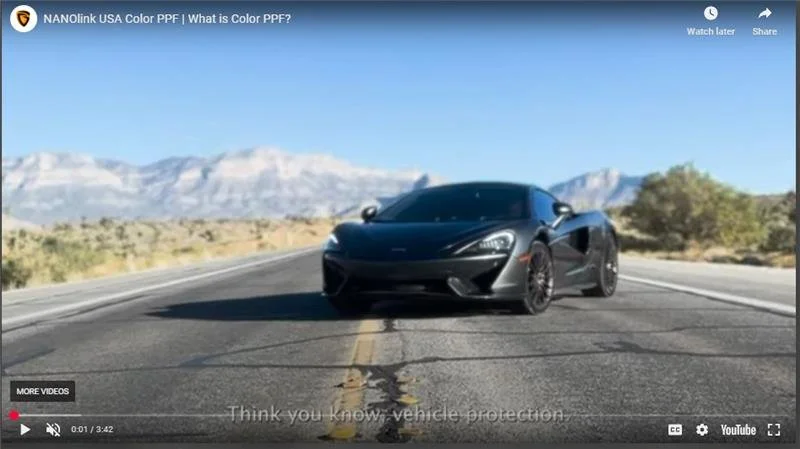
Satin PPF is a paint protection film with a low-sheen, semi-matte finish that sits between glossy and full matte film. Like all paint protection film, it’s a thick, self-healing urethane layer applied over your car’s factory paint to shield it from rock chips, road debris, and minor abrasions — but instead of the high-gloss look of standard PPF, satin film gives the car a subtle, understated appearance without going fully flat.
What this guide covers
- What Is Satin PPF, Exactly?
- How the Satin Finish Is Created
- Satin Finish PPF: Key Characteristics
- Satin vs Matte PPF
- Satin vs Gloss PPF
If you’ve seen a car with a soft, almost velvety paint finish that isn’t quite matte and isn’t quite shiny, there’s a good chance you were looking at satin PPF. It’s become one of the fastest-growing finish categories in the paint protection film market, sitting in a niche that vinyl wrap struggles to replicate convincingly.
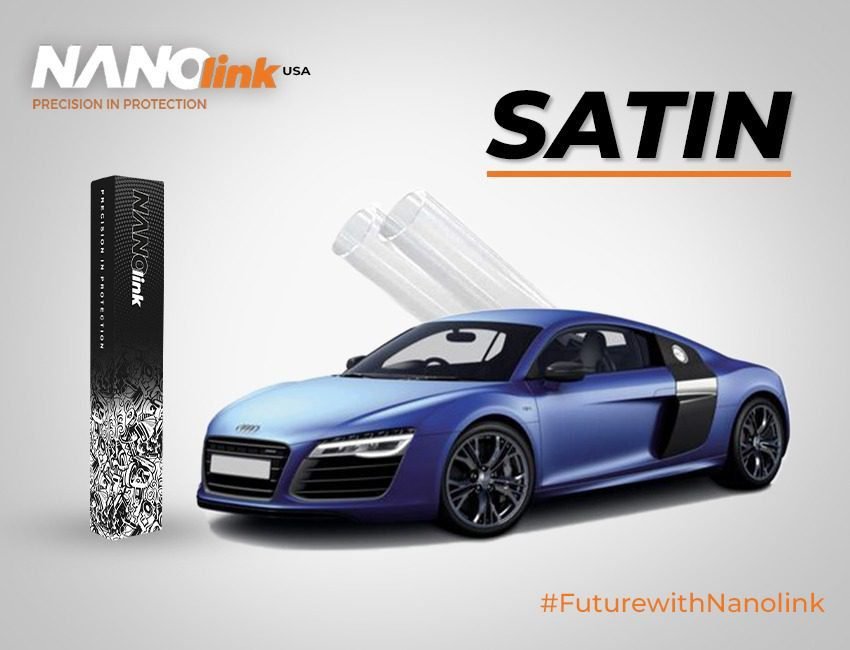
Stocking satin film? NanoTek and NANOlink satin PPF rolls ship from Minnesota at dealer pricing — see Satin PPF and the full NanoTek range.
Dealer pricingWhat Is Satin PPF, Exactly?
Paint protection film comes in three common finishes: gloss, satin, and matte. Gloss PPF is designed to be invisible — it protects the paint while preserving the factory shine, so most people can’t tell a car has PPF on it at all. Matte PPF goes the opposite direction, creating a completely flat, non-reflective look that reads as aggressive and intentional. Satin PPF is the middle ground: a soft, low-reflective sheen that reads as understated and premium without the stealth-mode flatness of matte.
Functionally, satin PPF works exactly like gloss or matte PPF. It’s typically an 8-mil-or-thicker thermoplastic polyurethane (TPU) film with a self-healing topcoat — meaning light swirls and fine scratches can disappear with heat from the sun or a heat gun. The base film, the adhesive layer, and the impact-absorbing properties are identical across all three finishes. The only real difference is the topcoat formulation that controls how much light the surface reflects.
How the Satin Finish Is Created
Manufacturers create the satin effect by adjusting the surface texture and refractive properties of the film’s topcoat during production, rather than by changing the protective base layer. A microscopically textured topcoat scatters light instead of reflecting it directly, which is what produces the soft sheen. This is also why satin PPF tends to be more forgiving than matte: the texture is less aggressive, so it picks up fewer fingerprints, water spots, and swirl marks from washing.
Satin Finish PPF: Key Characteristics
Appearance. Satin PPF offers a soft, low-glare sheen that’s noticeably different from factory paint without looking flat or “wrapped.” Under direct light it shows a gentle glow rather than a hard reflection, which is why it’s often described as looking more like a premium paint finish than a film.
Protection. Satin film provides the same impact, chip, and abrasion resistance as gloss or matte PPF, since the protective film itself doesn’t change — only the topcoat finish does. A 7.5-8 mil satin film will perform identically to its gloss counterpart against rock chips and road debris.
Durability. A quality satin PPF install typically lasts 5-10 years with proper care, in line with other PPF finishes. Lifespan depends more on installation quality, climate exposure, and maintenance habits than on the finish type itself.
Maintenance. Satin is easier to maintain than full matte PPF. It’s more forgiving of regular wash products and doesn’t show water spots or streaking as readily as matte finishes do, which require matte-specific soaps and microfiber towels to avoid leaving a glossy patch.
Reversibility. Like all PPF, satin film can be removed without damaging or requiring a repaint of the factory finish underneath. If you ever want to go back to a glossy look, a professional can remove the film cleanly with heat.
Satin vs Matte PPF
The most common point of confusion is satin vs matte PPF, since both create a non-glossy look from a distance. Up close, and especially in daily ownership, the differences are significant enough that picking the wrong one can mean a lot more maintenance work than expected. Here’s how they actually compare:
| Factor | Satin PPF | Matte PPF |
|---|---|---|
| Sheen level | Low-gloss, soft reflection | Flat, no reflection |
| Maintenance | Easier — more forgiving of standard wash products | Harder — requires matte-specific products to avoid streaking |
| Visual impact | Subtle, premium, understated | Bold, stealth, aggressive |
| Best for | Daily drivers, luxury sedans, anyone wanting a quiet upgrade | Performance cars, statement builds |
| Protection level | Identical — same base film, different topcoat | Identical — same base film, different topcoat |
| Typical cost vs gloss | Slightly higher | Highest of the three finishes |

Satin vs Gloss PPF
Compared to gloss PPF, satin is the more deliberate choice — gloss is meant to disappear, while satin is meant to be noticed. If your goal is to protect the factory paint without changing how the car looks, gloss is the right call. If you want the protection of PPF combined with a visual upgrade that still reads as clean and intentional rather than aggressive, satin fills that gap better than either gloss or matte.
Satin PPF Pros and Cons
Pros
- Distinctive look without commitment — you get a visual upgrade over stock paint without going as far as a full matte transformation.
- Easier day-to-day maintenance than matte film — fewer special products required, less risk of accidentally creating glossy patches while washing.
- Same self-healing, impact-resistant protection as any other PPF finish — you’re not trading protection for looks.
- Fully reversible — return to factory gloss by removing the film, no repaint needed, unlike a paint job or dye change.
Cons
- Costs more than a standard gloss install in most shops, due to the specialty film and often slower installation.
- Fewer installers stock satin film compared to gloss, so availability and installer experience can vary a lot by region.
- Still requires PPF-safe wash products, even if more forgiving than matte — it’s not a zero-maintenance finish.
Is Satin PPF Right for Your Car?
Satin tends to work best on vehicles where you want the car to look deliberately upgraded rather than aggressively modified — luxury sedans, SUVs, and daily drivers where a full matte wrap would feel like overkill. It also pairs well with darker factory colors, where the low-sheen look adds depth without flattening the color the way matte sometimes can.
If your priority is protecting a factory finish you already love, gloss PPF is the safer choice. If you want a bold, no-shine statement look, matte is the stronger fit. Satin is for the middle ground: protection plus a visual refresh that still looks premium.
How to Maintain Satin PPF
Satin PPF is more forgiving than matte, but it’s not maintenance-free. A few basics keep it looking right for years:
- Hand wash with a pH-neutral soap rather than running it through automatic car washes with abrasive brushes.
- Avoid wax and traditional polish — most satin and matte films are designed to be used without them, and standard waxes can leave a glossy residue.
- Use a dedicated matte/satin-safe spray sealant if you want extra protection and easier cleaning between washes.
- Address bird droppings, fuel spills, and bug splatter promptly, since satin’s texture can hold contaminants slightly longer than a slick gloss surface.
Satin PPF Brands
Satin finish film is offered by most major PPF manufacturers, though selection is narrower than gloss film since it’s a smaller share of overall demand. NANOlink Matte PPF, distributed by Pioneers Distribution, is one option built specifically for installers who want a consistent satin finish with the same self-healing topcoat and warranty backing as NANOlink’s gloss and color PPF lines.
When comparing satin PPF brands, the questions that matter most are: warranty length, topcoat self-healing performance, and whether the installer you’re using has direct experience with that specific film. Satin and matte films can behave differently than gloss during installation, particularly around stretch and edge-wrapping, so installer familiarity with the specific product matters more than it does for standard gloss film.
Frequently Asked Questions
Is satin PPF the same as matte PPF?
No. Both are non-glossy, but satin has a soft, low-level sheen while matte is completely flat. They also differ in maintenance difficulty — satin is more forgiving of standard wash products.
Does satin PPF protect as well as gloss PPF?
Yes. The protective film underneath is the same; only the topcoat finish changes. Impact resistance, self-healing, and chip protection are equivalent across all three finishes.
How long does satin PPF last?
Typically 5-10 years with proper care, in line with other PPF finishes, depending on climate, maintenance, and film quality.
Can you ceramic coat satin PPF?
Yes, many installers apply a ceramic topcoat over satin PPF for added hydrophobic protection and easier cleaning, though it’s not required for the film to perform correctly.
Is satin PPF more expensive than gloss?
Usually slightly more, since satin film is a specialty product with less universal availability than standard gloss film, and installation can take longer.
Can satin PPF be installed on just part of the car?
Yes. Satin film can be installed as a full wrap or on specific panels (hood, mirrors, rocker panels) just like gloss or matte PPF, though mixing finishes on the same panel is not recommended.
Related reading: PPF vs Ceramic Coating | How to Prevent PPF Silvering and Lift Lines
Related guides & products
- NANOlink Satin PPF — shop the 8 mil satin finish film
- PPF vs ceramic coating — which protects your paint better
- how to remove PPF — safe removal without paint damage
New guide: see all the types of paint protection film — gloss, matte, satin and colored PPF compared.
Shop paint protection film
Every finish, in stock at dealer pricing:
 NanoTek Prime Clear Gloss PPFNanoTek Prime — self-healing gloss, invisible factory-paint protection.$150Shop →Matte / Satin
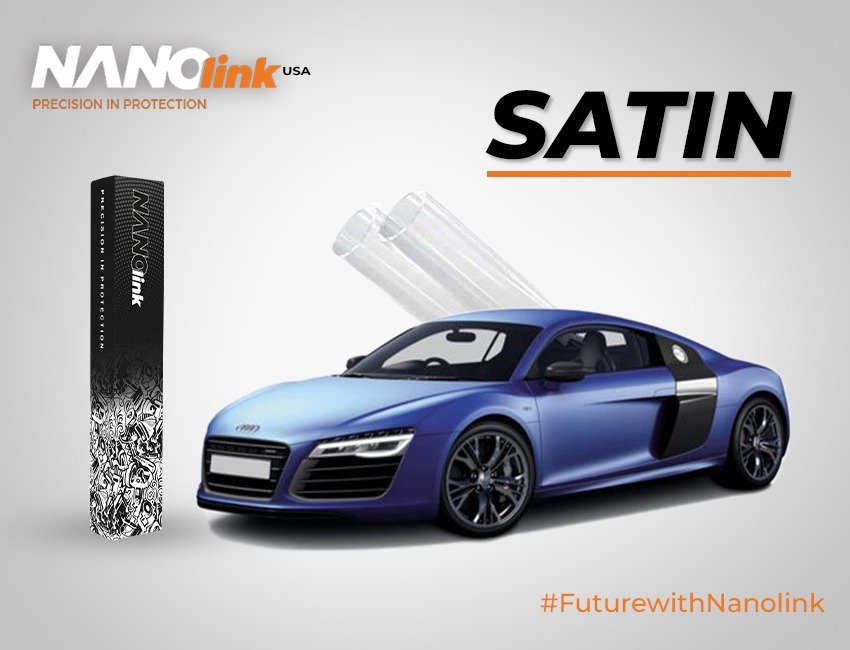 NANOlink Matte PPFNANOlink Matte — factory-matte look with full protection.$258Shop →Colored
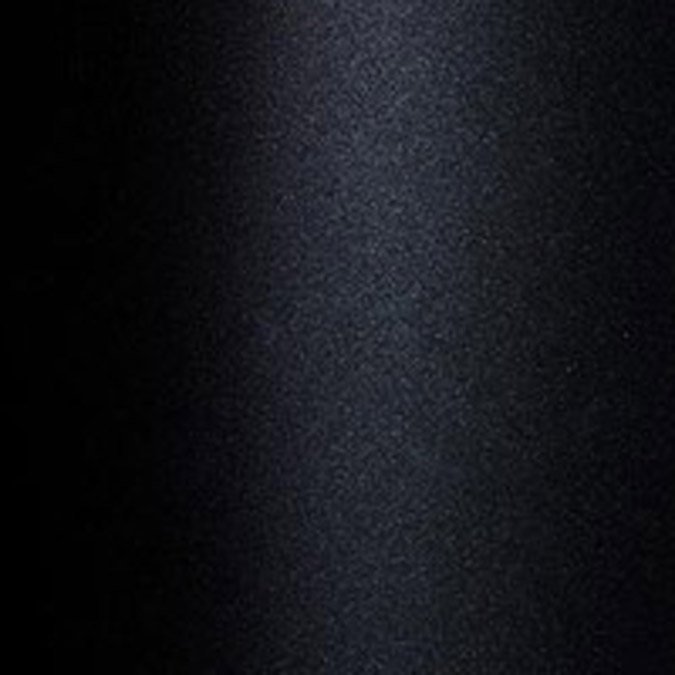 Matte Black Color PPF TPJ-09Color change and protection in one self-healing film.$150Shop →Premium
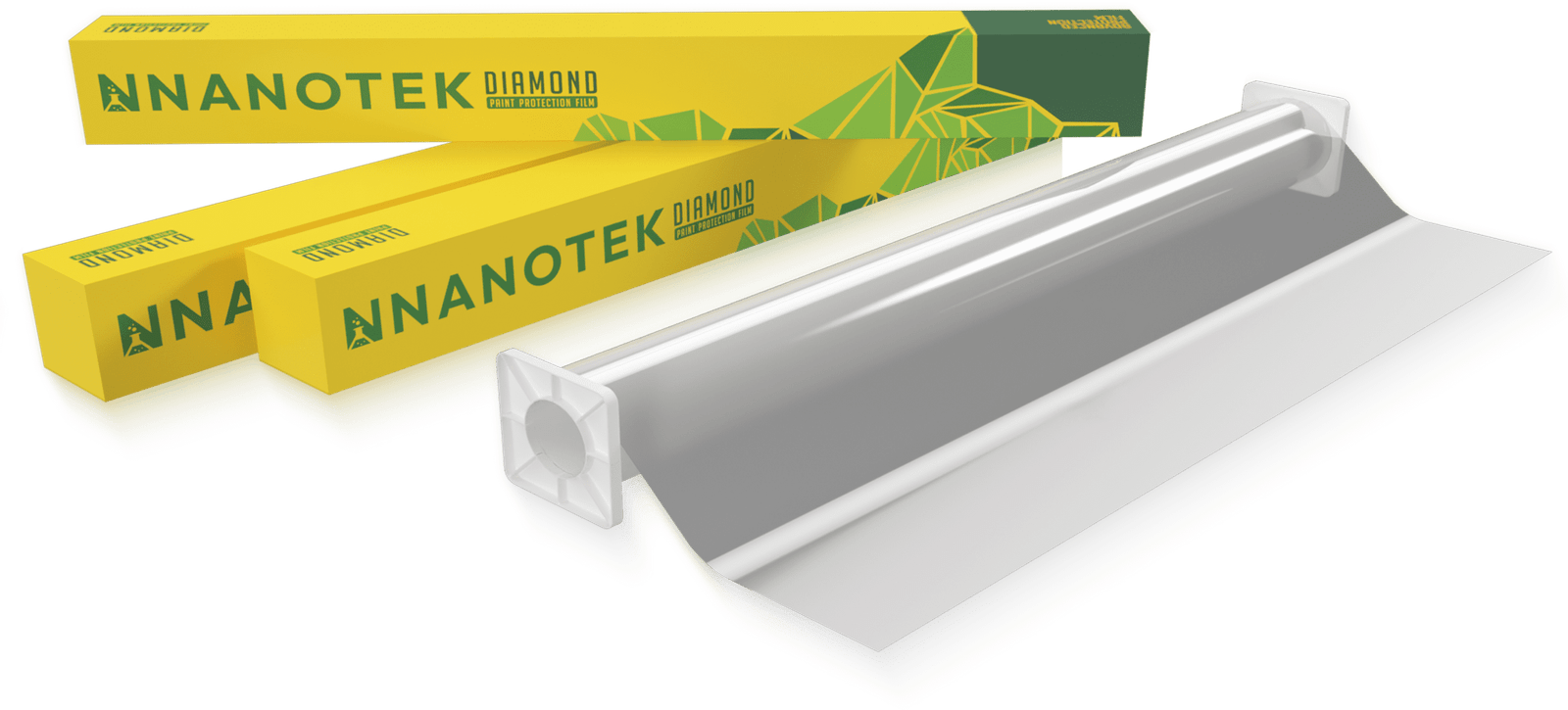 NanoTek DiamondNanoTek Diamond — flagship clarity, thickness and durability.$480Shop →
Protect it with premium PPF
Gloss, matte and colored paint protection film at wholesale dealer pricing.
Browse PPF FilmsBrowsing satin options? See the full NanoTek PPF & Prizm window tint range we stock at dealer pricing.