




Ask ten paint protection film installers what separates a flawless, edge-to-edge install from a hazy, fingerprinted mess, and most won’t say the film. They’ll say the fluid. The solution you spray before the film ever touches the paint decides whether you get clean glide, sharp edges, and zero contamination — or lifted corners, silking, and a callback.
The quick version
- Use slip to position film, tack to lock edges & dot-matrix, gel for controlled slip on big PPF panels.
- Match the fluid to the job — most pro shops keep all four on the shelf.
- Skip baby shampoo: additives and inconsistent dilution cloud tint and weaken adhesion.
Yet install solutions are the most misunderstood part of the job. Slip, tack, gel — installers use the words interchangeably, mix them by feel, and far too many are still reaching for a bottle of baby shampoo. This is the complete guide to what each solution actually does, when to use it, how to mix it, and why the pros moved on.
First, what an install solution actually does
When you lay PPF or window film onto a surface, two forces are fighting each other. You need slip — enough lubrication to slide the film into position without it grabbing — and you need tack — the film to lock down and stay put once it’s aligned. Get the balance wrong and the install fails in one of two ways: too much slip and edges won’t hold; too little and you can’t reposition before the adhesive grabs.
Every professional install fluid is engineered to control that slip-to-tack balance. There are three tools for the job, and they are not interchangeable.
1. Slip Solution — glide and alignment

Slip solution is the workhorse. Sprayed onto the adhesive side of the film (and the surface), it creates a thin lubricating layer that lets you float the film into exact position, squeegee out water, and work bubbles to the edge without the glue biting prematurely. On window tint it lets the film slide on glass; on PPF it buys you the working time to align large, awkward panels.
The catch: slip chemistry is specific. Too slippery and the film never tacks; not slippery enough and you’re fighting the film. That’s exactly why a purpose-built product beats a kitchen mix — more on that below.
InstaSlip — Premium Slip Solution for PPF & Tint
A pro-grade slip concentrate engineered for consistent glide on both film types — no residue, no haze, no guesswork. Dilute roughly 5–8 mL per gallon of distilled water and you have a repeatable install fluid every time.
From $23.99
Shop InstaSlip →2. Tack Solution — lock-down and edges

Tack solution does the opposite job of slip — and that’s the point. Where slip keeps the film moving, tack makes it stop. Applied to a localized area (an edge, a tight curve, a wrap point), tack solution breaks down the slip layer, reduces surface tension, and helps the adhesive grab so the film sets exactly where you want it. It’s how clean installers get edges that stay down instead of lifting a week later.
On window film, tack control is what stops the film “tacking too fast” on hot glass before you’ve finished positioning — a daily frustration for tint shops in summer.
TackStop — Window Film Tack Control Solution
Purpose-built to control how fast film grabs, so you set edges and curves on your terms — not the film’s. The missing bottle on most install benches.
$27
Shop TackStop →3. Installation Gel — grip with control
Installation gel is the newer entry in the kit and, for a lot of PPF work, a game-changer. A gel carries more body than a watery slip, so it clings to the adhesive longer, gives you a more controlled glide on vertical and compound-curved panels, and holds its lubrication instead of running off. Installers reach for gel on the tricky pieces — bumpers, mirrors, full hoods — where a thin slip solution would sheet away before you’re done.
InstaGel — Premium Installation Gel for PPF
A premium install gel that gives you longer working time and controlled grip on the hardest panels — the difference between fighting a piece and placing it.
$32
Shop InstaGel →Slip vs Tack vs Gel: quick comparison
| Solution | Job | Use it when… | Best for |
|---|---|---|---|
| Slip (InstaSlip) | Lubricate & align | Positioning film, squeegeeing out water | Full panels, window tint, general install |
| Tack (TackStop) | Lock down & set edges | Sealing edges, curves, hot-glass tint | Edges, wrap points, summer tint jobs |
| Gel (InstaGel) | Controlled grip & glide | Working vertical or compound-curve panels | Bumpers, mirrors, full-hood PPF |
Most clean installs use all three: slip to place the film, gel where you need controlled grip, and tack to lock the edges. They’re a system, not competitors.
How to mix your slip solution
Consistency is everything — the same install should behave the same way every time. Always start with distilled water (tap water minerals cause spotting and contamination), add your slip concentrate at the recommended ratio, and shake gently. With InstaSlip, that’s roughly 5–8 mL per gallon; run the lighter side for more tack, the heavier side for more glide. Mix fresh, label your bottles, and never eyeball it — a bottle that’s twice as strong on Tuesday as it was on Monday is how you get inconsistent results you can’t explain.
Why installers stopped using baby shampoo
For years, “a few drops of baby shampoo in a spray bottle” was the default slip solution. It’s cheap and it’s everywhere — so why did serious shops drop it?
- Inconsistent chemistry. Shampoo formulas change without notice. Your slip ratio drifts and you don’t know why.
- Residue & haze. Additives, fragrances and conditioners can leave film cloudy or interfere with adhesion and long-term clarity.
- Too much foam, not enough control. Suds trap under the film and read as bubbles you have to chase out.
- No tack control at all. Shampoo only slips — it can’t help you set an edge.
A purpose-built slip solution like InstaSlip is engineered for film: predictable slip, clean tack, no residue. On a $6,000 PPF job or a car full of tint, the few dollars of difference isn’t where you cut corners.
The complete install-solution kit
If you’re setting up a bench or restocking, this is the trio that covers every install:
Frequently asked questions
What is the difference between slip solution and tack solution?
Slip solution lubricates the film so you can slide it into position; tack solution does the reverse — it breaks down the slip layer on a localized area so the adhesive grabs and the film sets. Slip is for aligning, tack is for locking edges. Most installs use both.
Can I use baby shampoo as a slip solution?
You can, but professionals have largely stopped. Baby shampoo has inconsistent chemistry, can leave residue or haze, foams too much, and offers no tack control. A purpose-built slip solution gives predictable results film-to-film.
What is installation gel used for?
Installation gel is a thicker install fluid that clings to the adhesive longer, giving controlled glide and more working time on vertical and compound-curved panels like bumpers, mirrors and full hoods — where a thin slip solution would run off.
How much slip concentrate do I mix per gallon?
With a pro concentrate like InstaSlip, roughly 5–8 mL per gallon of distilled water. Use less for more tack, more for more glide. Always mix with distilled water to avoid mineral spotting.
The bottom line
The film gets the glory, but the fluid does the work. Slip to place it, gel to control it, tack to lock it — matched to the panel and mixed with distilled water, that’s how clean installs stay clean. Ditch the baby shampoo, stock the right three bottles, and your installs get more predictable overnight.
Pioneers Distribution supplies InstaSlip, TackStop and InstaGel — the professional install-solution system — shipped fast from our US warehouse at trade pricing. Become a dealer for wholesale rates on your whole bench.
Building your bench? Read the complete PPF & window tint installation tools guide.
For hot-glass installs where the film tacks before you can position it, TackStop is an evaporation-control additive that keeps the film slideable longer — pair it with your slip solution.
The install solutions
Match the fluid to the job — most pro shops keep all four on the shelf:
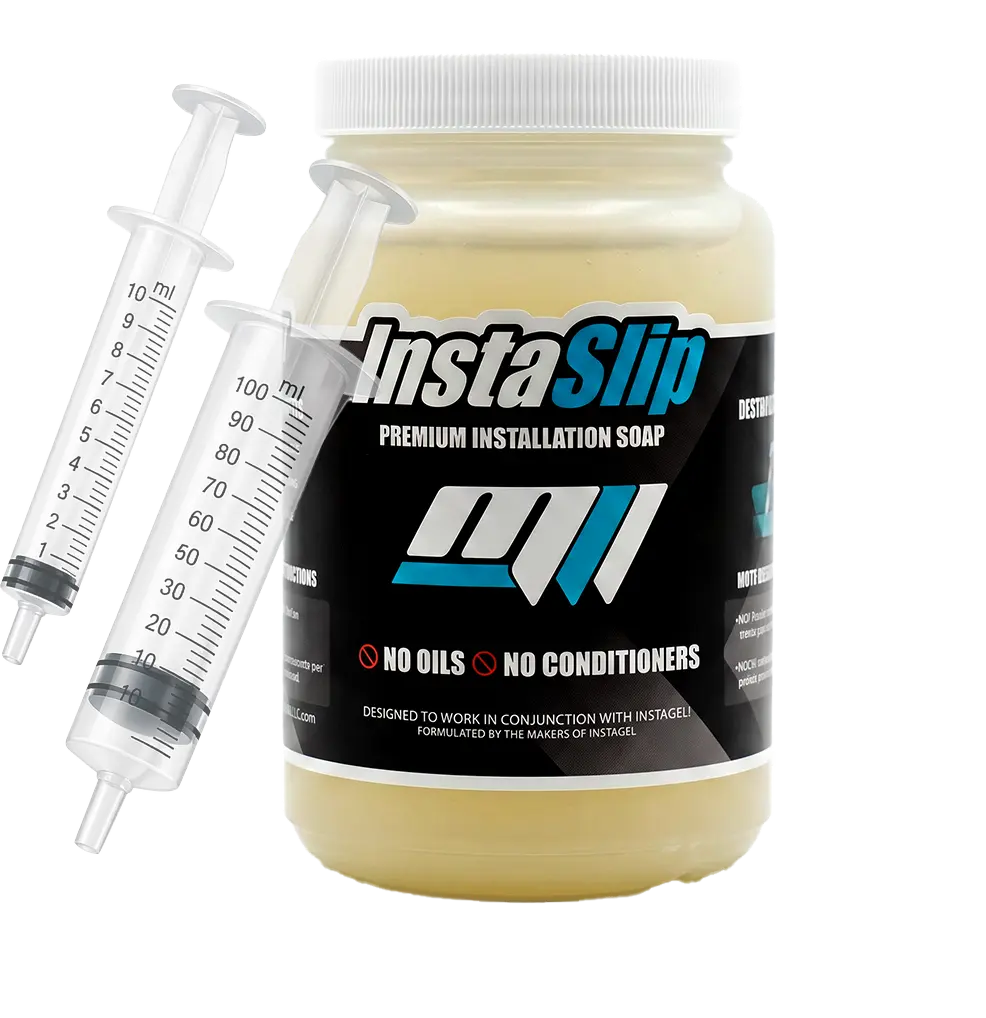 InstaSlipOil-free slip — slide film into position, flush clean, zero residue.$23.99Shop →Installation Gel
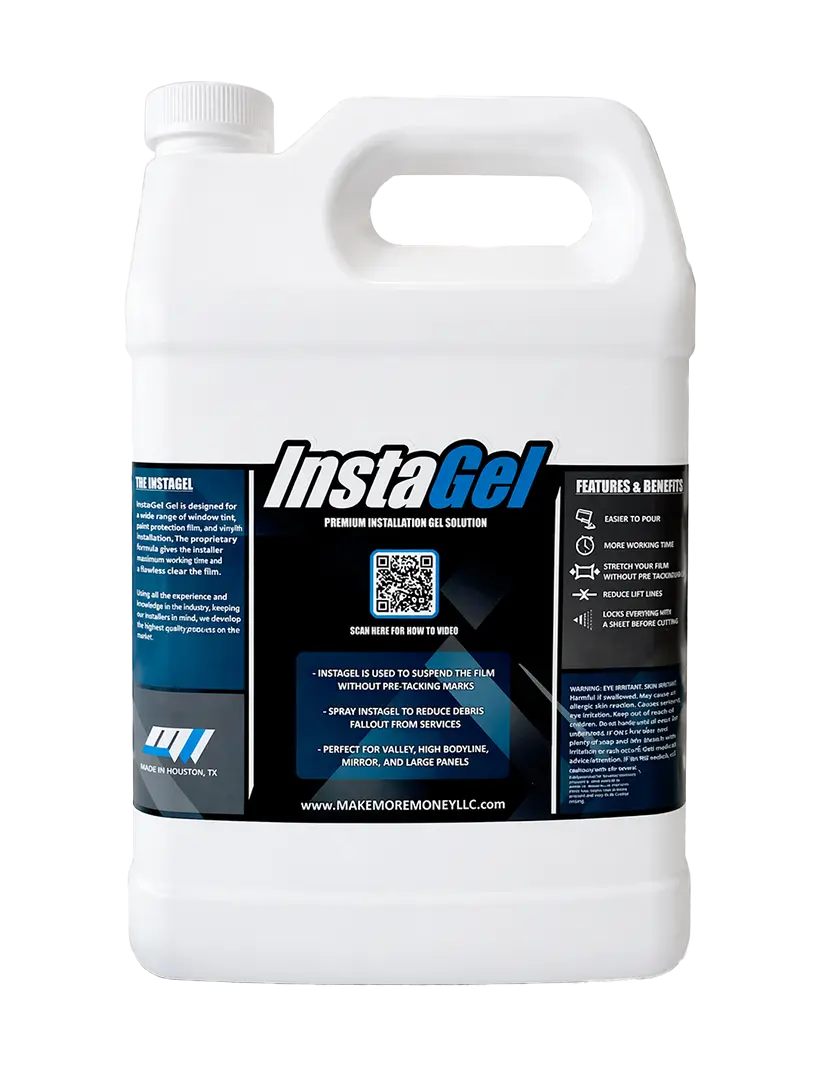 InstaGelControlled slip for big PPF panels — no silvering, no lift lines.$32Shop →Tack Solution
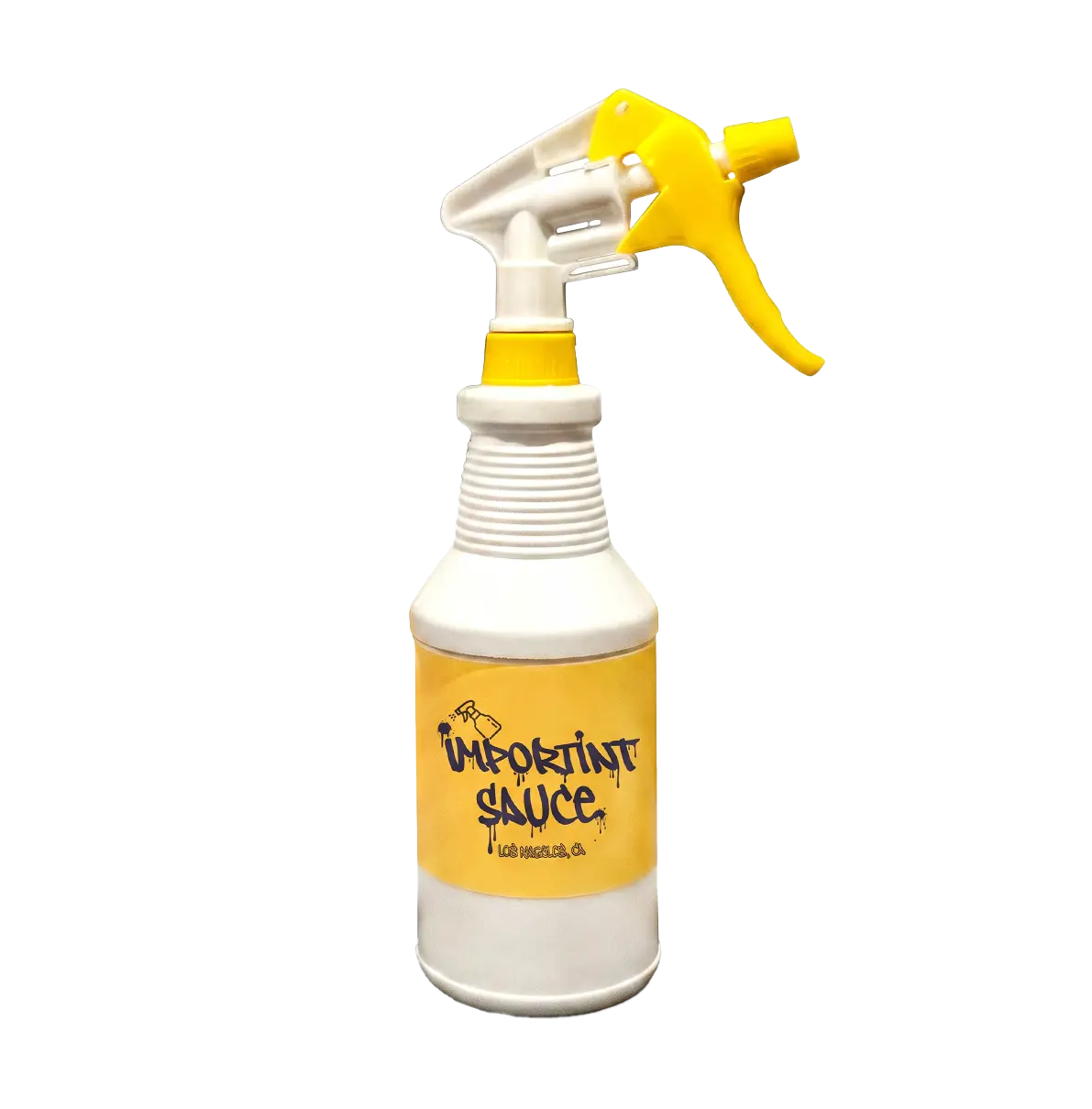 ImporTint SauceMakes edges grab — the go-to for dot-matrix borders.$30Shop →Tack Control
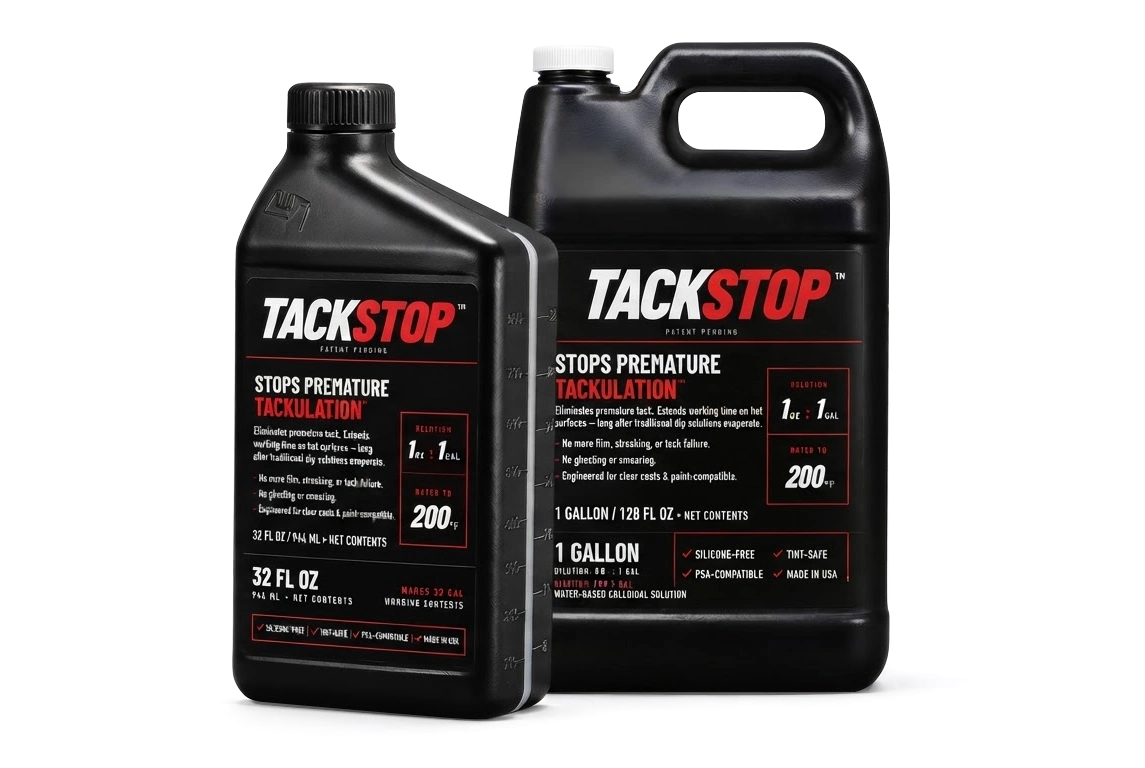 TackStop – Window Film Tack Control SolutionStops premature tack on hot glass — 3–5× more working time.$27Shop →
Stock the fluids that make installs bulletproof
Slip, tack, gel and tack-control solutions at dealer pricing, shipped across the USA.
Shop Install Solutions