



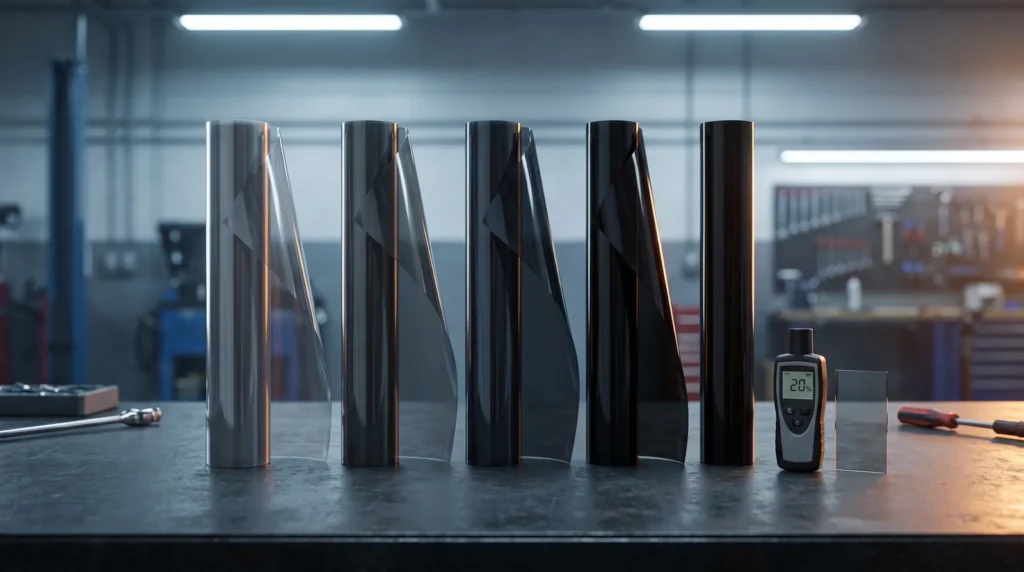
Customers ask for “ceramic” because they have heard it rejects heat. Installers buy ceramic because it sells at a premium and holds its colour. But the roll you stock has to match your market: the right shades, the right widths, a real IR number, and a price per car that leaves margin. This is the installer’s guide to choosing ceramic window tint film — what the technology actually does, how to read VLT and IR, which widths to buy for which glass, and what each roll costs per vehicle.
The quick version
- Ceramic film rejects infrared heat with a nano-ceramic layer, not metal — so no signal interference and no colour fade.
- VLT is how dark it looks; IR rejection is how much heat it stops. Sell the second number.
- Stock 20″–24″ for side glass, 36″–40″ for rear glass, 60″ for one-piece truck and SUV backs.
- At dealer pricing, ceramic film costs roughly $30–$45 per sedan versus $20–$30 for carbon.
- An illuminated display board sells ceramic faster than any explanation.
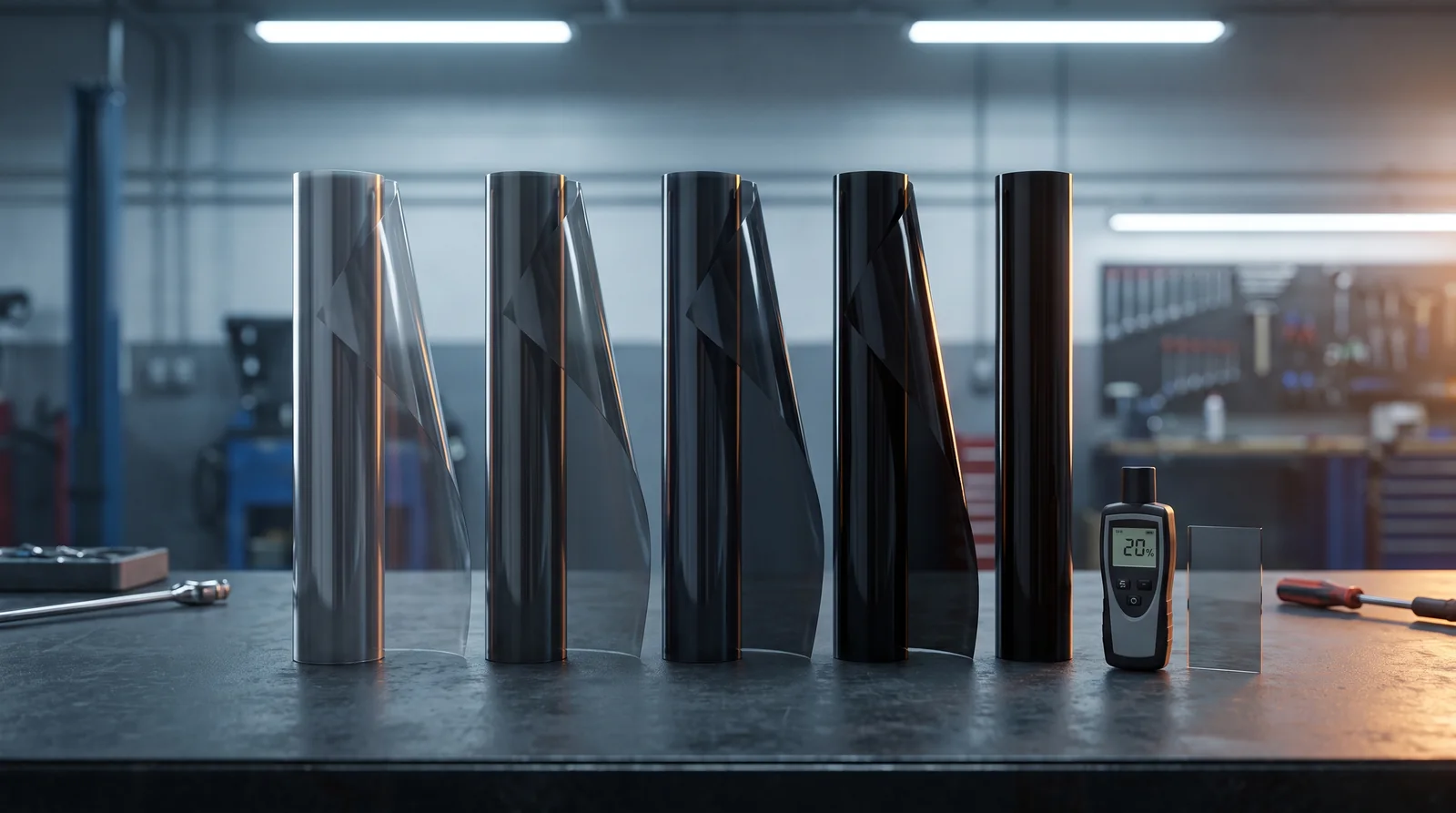
What makes a window film “ceramic”
Ceramic film carries a layer of nano-ceramic particles that absorb and reflect infrared energy — the part of sunlight you feel as heat. Because that layer is non-metallic, the film does not interfere with phone, GPS or satellite radio signals, and it does not fade or turn purple the way dyed film does. Multi-layer ceramic films such as NanoTek Prizm Ceramic Plus combine that IR layer with UV blocking, a scratch-resistant hard coat and a colour-stable dye so the shade you install is the shade the customer keeps.
VLT vs IR rejection: the two numbers that matter
VLT (visible light transmission) is how much visible light passes through — 5% is limo dark, 70% is nearly clear. It is what state law regulates and what the customer sees. IR rejection is how much infrared heat the film stops, and it is mostly independent of darkness. A quality 70% ceramic can reject more heat than a cheap 5% dyed film. That is the sale: a light, legal shade that still makes the cabin noticeably cooler.
| Shade (VLT) | Typical use | Notes |
|---|---|---|
| 70% | Windshields where legal, light front glass | Nearly clear; heat rejection without the dark look. |
| 50% | Front side glass in strict states | Mild shade, strong glare cut. |
| 35% | The most common front-side shade | Balances privacy, legality and visibility. |
| 20% | Rear sides and rear glass | Privacy with usable night visibility. |
| 15% | Rear glass, SUVs | Darker privacy tier. |
| 5% | Rear glass, limo, commercial | Maximum privacy; check your state’s rear-glass rules. |
Always check the limit before you quote: our VLT percentages guide explains how the numbers combine with factory glass.
Ceramic vs carbon: when to sell which
| Prizm Carbon | Prizm Ceramic Plus | |
|---|---|---|
| Heat rejection (IR) | Up to 75%, depends on shade | Up to 97% |
| Look | Deep charcoal, factory OEM | Neutral, non-reflective |
| Signal interference | None (non-metallic) | None (non-metallic) |
| Colour stability | Colour-stable, non-fading | Colour-stable, non-fading |
| Shades | 5 / 15 / 25 / 35 / 50 | 5 / 15 / 20 / 35 / 50 / 70 |
| 36″ × 100′ roll | $235 | $350 |
| 60″ × 100′ roll | $350 | $550 |
| Warranty | Lifetime | Lifetime, transferable |
| Best for | Privacy, value, fleet | Heat, EVs, premium vehicles, light legal shades |
For the full head-to-head including dyed film, read ceramic vs carbon vs dyed window tint.
Roll widths: which size for which glass
| Roll width | Square feet per 100′ | Use it for |
|---|---|---|
| 20″ | 167 sq ft | Most front and rear side windows on cars |
| 24″ | 200 sq ft | Taller side glass, trucks, fewer seams |
| 36″ | 300 sq ft | Rear glass on most cars, large side windows |
| 40″ | 333 sq ft | Wide rear glass, minivans |
| 60″ | 500 sq ft | One-piece rear glass on trucks and SUVs, commercial |
A shop that mostly does passenger cars can run on 24″ and 36″. Add 60″ once truck and SUV rear glass becomes a weekly job.
Cost per car by roll
Film cost per vehicle at dealer pricing, assuming a typical sedan uses 25–35 square feet including waste:
| Roll | Price | Cost per sq ft | Film cost per sedan |
|---|---|---|---|
| Prizm Carbon 36″ × 100′ | $235 | $0.78 | $20 – $27 |
| Prizm Carbon 60″ × 100′ | $350 | $0.70 | $18 – $25 |
| Prizm Ceramic Plus 36″ × 100′ | $350 | $1.17 | $29 – $41 |
| Prizm Ceramic Plus 60″ × 100′ | $550 | $1.10 | $28 – $39 |
The gap between carbon and ceramic film cost is about ten to fifteen dollars a car. The gap in what customers will pay for a cooler cabin is far larger — which is why ceramic is the upsell that pays for the shop.
Installing ceramic film: what to watch
- Hot glass tacks fast. Add a tack-control concentrate to your slip solution so the film stays slideable — see tacking too fast on hot glass.
- Use a dedicated tack solution on dot matrix and edges so they do not silver — how to tint over dot matrix.
- Keep slip and tack in separate, labelled bottles; conditioner-free slip only.
- Shrink with a consistent pattern; ceramic rewards patience on compound curves.
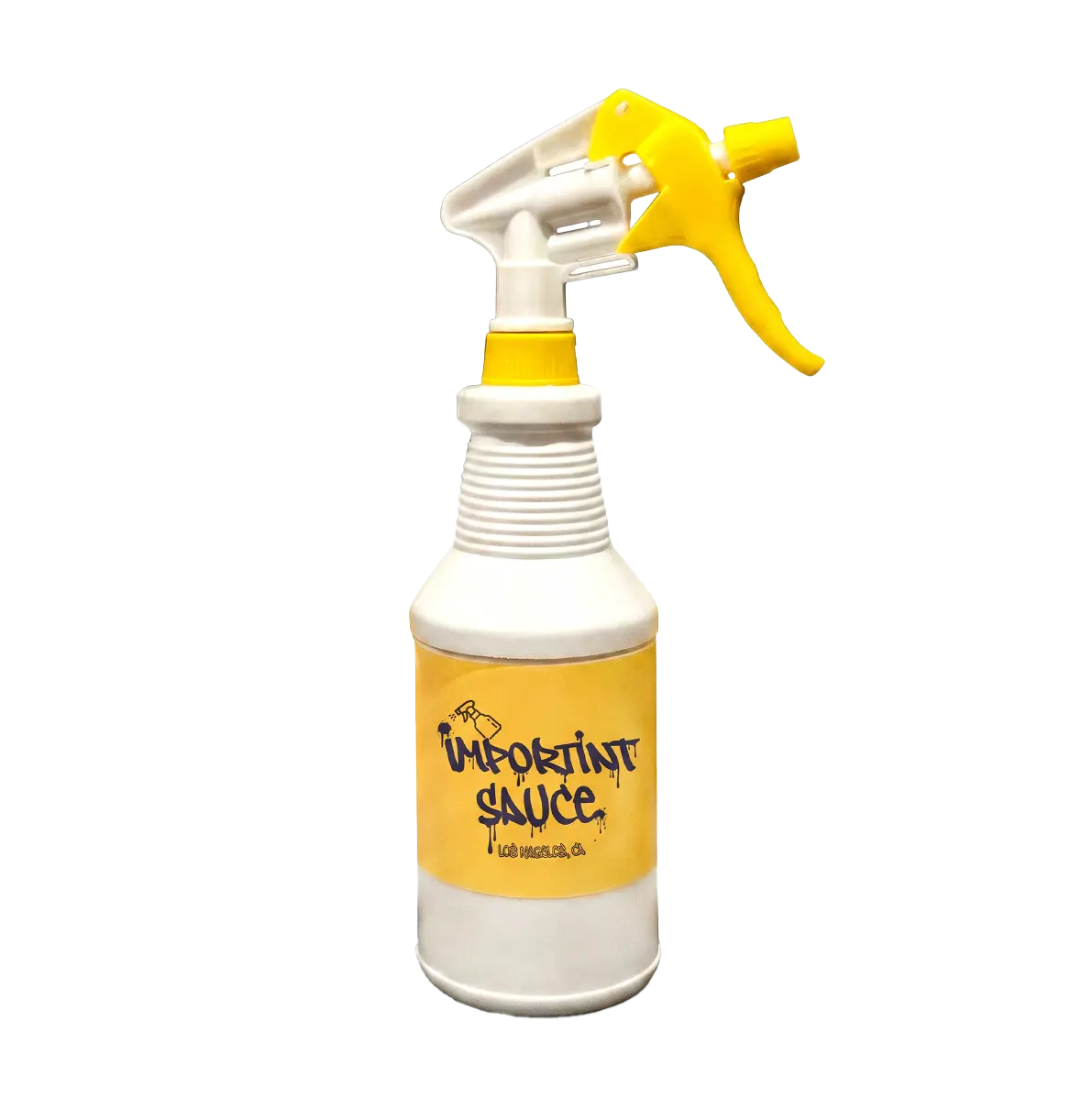 ImporTint SauceImporTint Sauce — the dot-matrix and edge solution tint shops run on.from $30Shop →Slip Solution
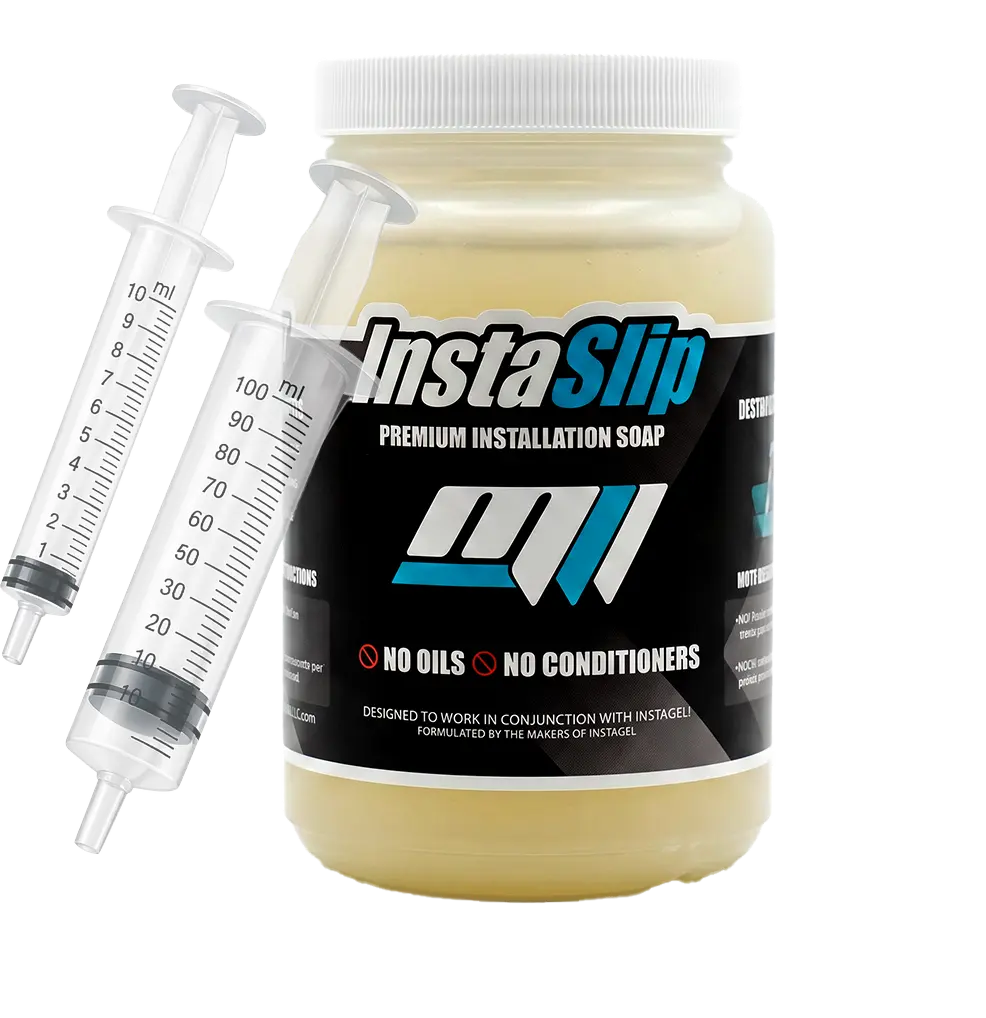 InstaSlipInstaSlip — oil-free, conditioner-free slip, 5–8 mL per gallon.from $23.99Shop →Tack Control
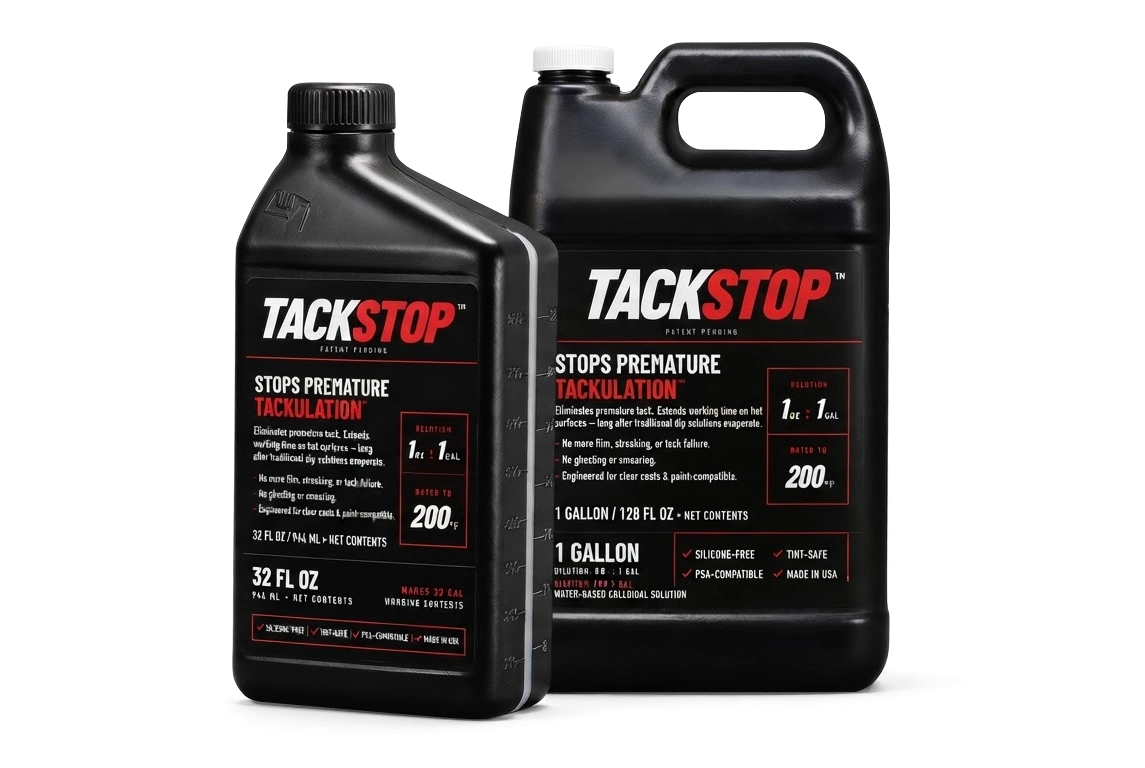 TackStopTackStop — 1 oz per gallon buys 3–5× more working time on hot glass.from $27Shop →PPF Gel
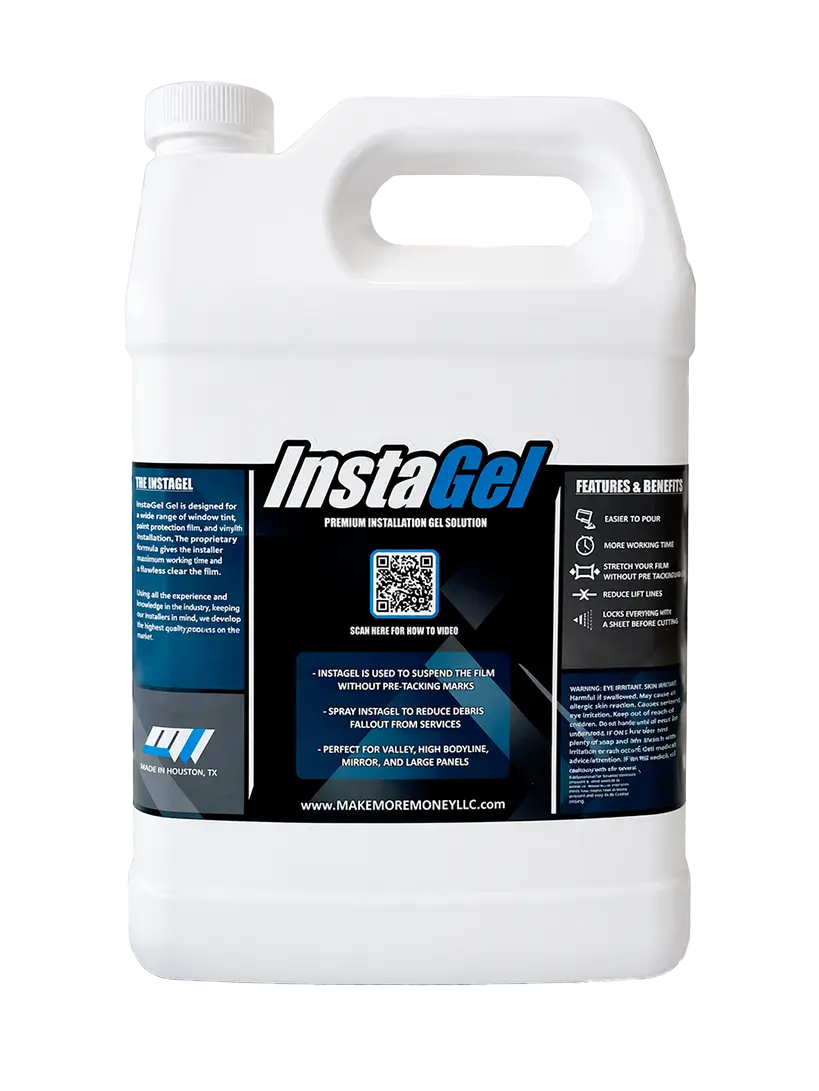 InstaGelInstaGel — if you also do PPF, this is the install gel.from $32Shop →
Sell it in the shop
Customers cannot see heat. An illuminated Prizm display board next to the counter turns a technical pitch into a thirty-second demonstration and moves more jobs to the ceramic tier.
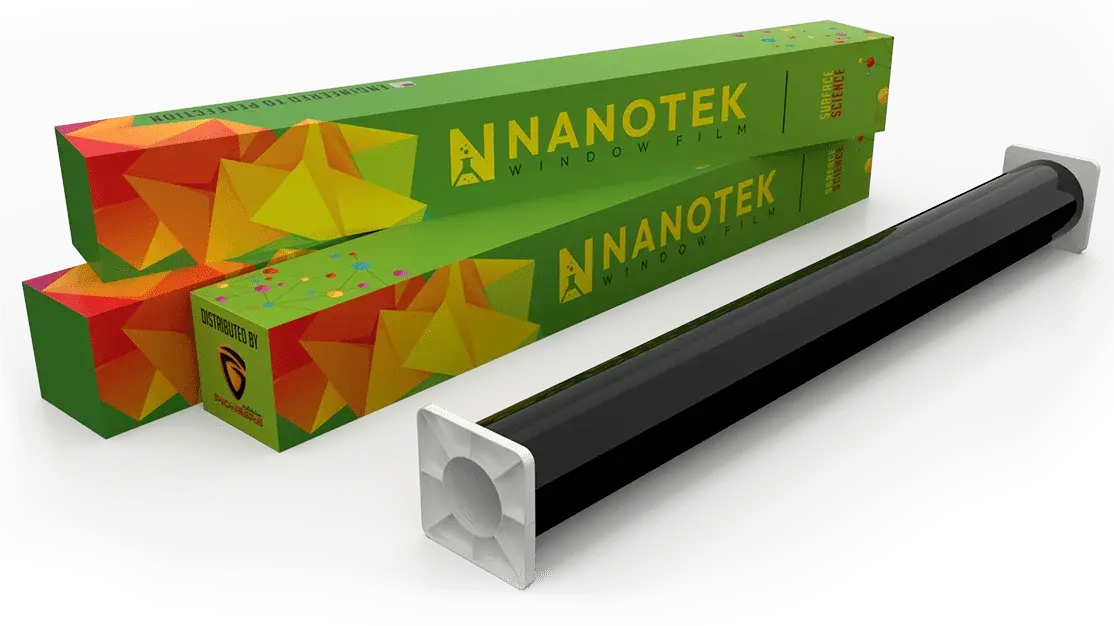 NanoTek Prizm Ceramic Plus Window TintPrizm Ceramic Plus — up to 97% IR rejection, six shades, lifetime transferable warranty.from $205Shop →CarbonNanoTek Prizm Carbon Window TintPrizm Carbon — colour-stable value tier, five shades.from $145Shop →Showroom
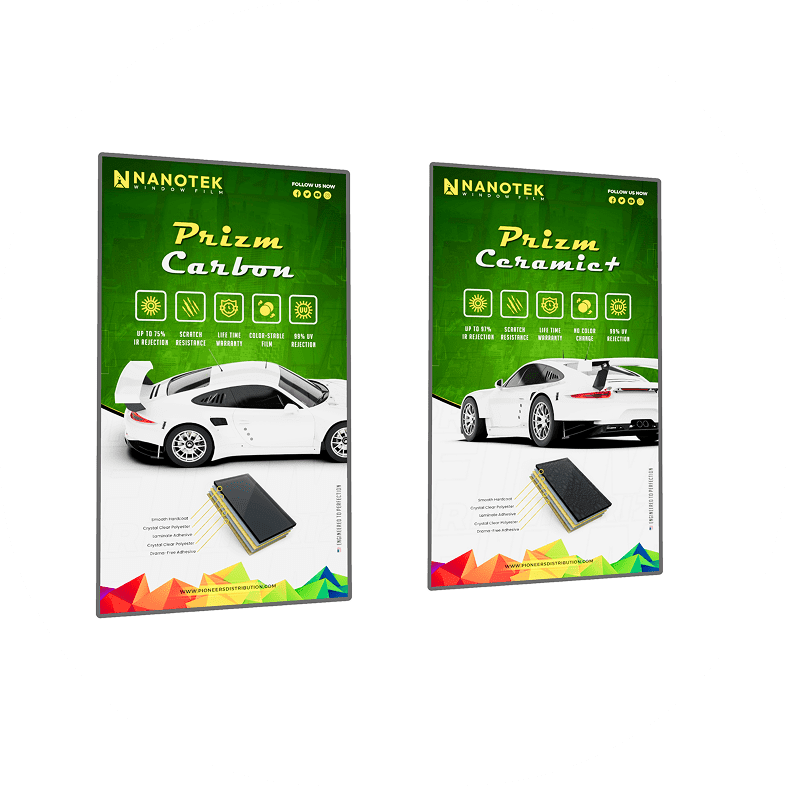 NanoTek Prizm Display BoardsPrizm illuminated display boards — 17″ × 24″, LED backlit, wall or free-standing.from $150Shop →
Frequently asked questions
Yes. It costs roughly $10–$15 more per sedan in film at dealer pricing and sells at a clear premium, with fewer fade complaints and no signal issues.
Real ceramic films publish IR numbers well above carbon. NanoTek Prizm Ceramic Plus rejects up to 97% of infrared heat; Prizm Carbon up to 75% depending on shade.
No. Ceramic is non-metallic, so it does not block or degrade signals the way metallised films can.
24″ for side glass and 36″ for rear glass cover most passenger cars. Add 60″ when truck and SUV rear glass becomes regular work.
Through an authorized distributor. Pioneers Distribution supplies NanoTek Prizm Ceramic Plus and Prizm Carbon to registered dealers at wholesale pricing, shipped from Minnesota.
Stock NanoTek Prizm at dealer pricing
Ceramic Plus and Carbon rolls in every width, plus display boards and install chemistry. Apply for a dealer account.
Become a Dealer