



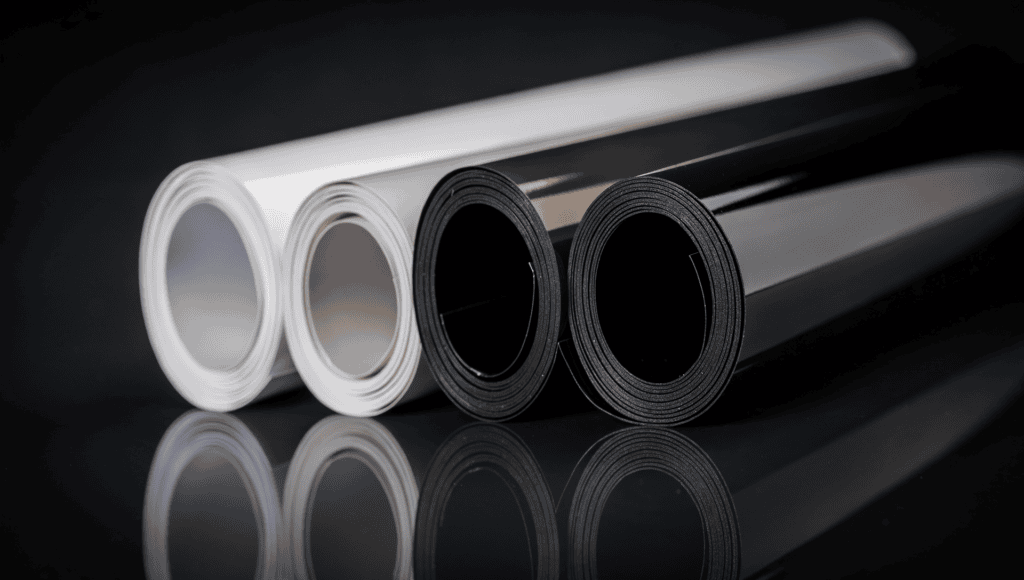
“What percentage tint should I get?” is the most common window-tint question — and the answer depends on understanding VLT. This guide explains what window tint percentages mean, what 5%, 20%, 35%, 50% and 70% actually look like, the legal side, and the one thing most buyers get wrong: darkness is not the same as heat rejection.
The quick version
- VLT (Visible Light Transmittance) is how much light the film lets through — a lower % means a darker tint.
- Common shades: 70% (barely visible) · 50% · 35% (classic factory look) · 20% · 5% (limo).
- Darkness ≠ heat rejection: a light 50% ceramic film can reject more heat than a dark 20% dyed film.

What does window tint percentage (VLT) mean?
Window tint percentage is measured as VLT — Visible Light Transmittance. It’s the percentage of visible light that passes through the film and glass into the cabin. A 70% tint lets 70% of light through (very light); a 5% tint lets only 5% through (very dark, a “limo” look). So the lower the number, the darker the tint.
Common window tint percentages & what they look like
| VLT % | Look | Best for |
|---|---|---|
| 70% | Nearly clear | Max UV/heat protection with a factory look; legal almost everywhere |
| 50% | Light | Subtle glare & UV reduction, very legal-friendly |
| 35% | Medium (classic) | The popular factory-style look; good balance |
| 20% | Dark | Strong privacy, still see out at night |
| 5% | Limo | Maximum privacy; usually only legal on rear glass |
The big misconception: darkness vs heat rejection
Here is what most buyers miss: VLT only describes how dark the film looks — not how much heat it blocks. Heat rejection comes from the film’s technology (dyed, carbon, or ceramic), not its shade. A light 50% nano-ceramic film can reject more infrared heat than a dark 20% dyed film. So choose your percentage for looks and legality, and choose your film type for performance. Learn more in our guide to ceramic window tint.
A note on legal limits
Legal tint limits are set by state and differ for front side, rear side, and rear windows — front windows are usually restricted to lighter shades (often 30–50% VLT), while rear glass can often be much darker. Always check your state’s current VLT limits before choosing a percentage.
How to choose your tint percentage
- Want a factory look? 35% is the classic, safe choice.
- Want privacy? 20% on the rear, a legal shade up front.
- Want max heat/UV protection with a clean look? A light 50–70% ceramic film.
- Always pair your chosen shade with a quality film type — that’s what determines heat rejection.
Shop NanoTek window tint film
Carbon and nano-ceramic tint for installers, at wholesale:
 NanoTek Prizm Ceramic Plus Window TintPrizm Ceramic Plus — maximum heat & UV rejection, stays optically clear.$205Shop →CarbonNanoTek Prizm Carbon Window TintPrizm Carbon — deep matte look, no signal interference, great value.$145Shop →Display Boards
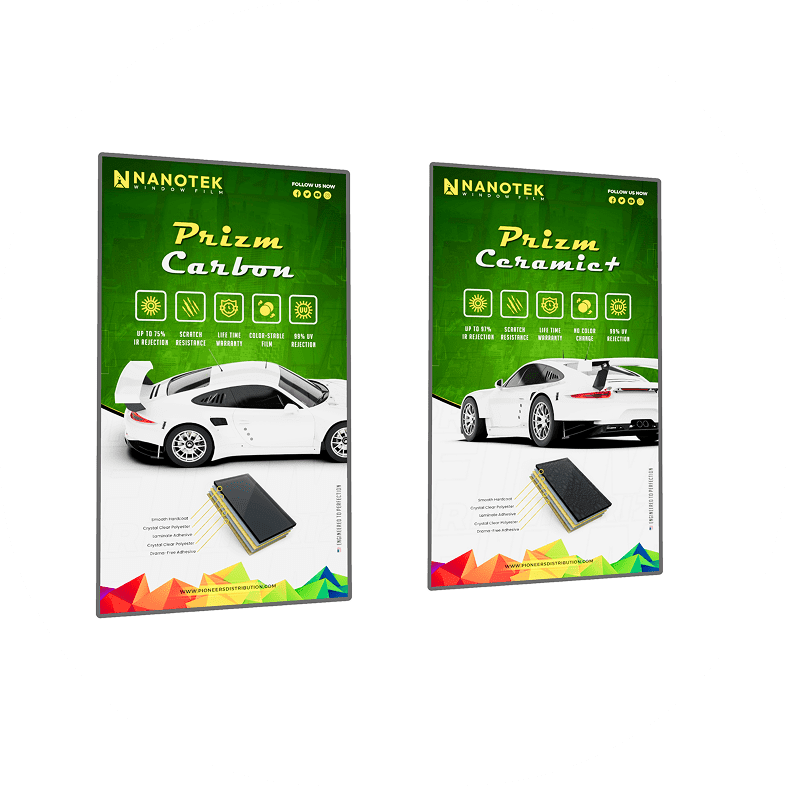 NanoTek Prizm Display BoardsShow customers the shade & heat difference in the showroom.$150Shop →
Window tint percentage FAQs
It means the film has 20% VLT — it lets 20% of visible light through, so it’s fairly dark. Lower percentages are darker.
It depends on your state and the window. Front side windows are usually limited to lighter shades (often 30–50%), while rear windows can often be much darker or even limo (5%).
35% is the most popular choice — it gives the classic factory look with good glare and UV reduction while staying legal in most states.
Not necessarily. Heat rejection comes from the film technology (ceramic > carbon > dyed), not the darkness. A light ceramic film can out-perform a dark dyed film on heat.
Choose the right film, not just the shade
Carbon and nano-ceramic tint that reject heat at any percentage — wholesale for installers.
Shop Window Tint